Author: Sanjay Rawat

  • How Litigation Support Outsourcing Reduces Case Costs Without Compromising Quality

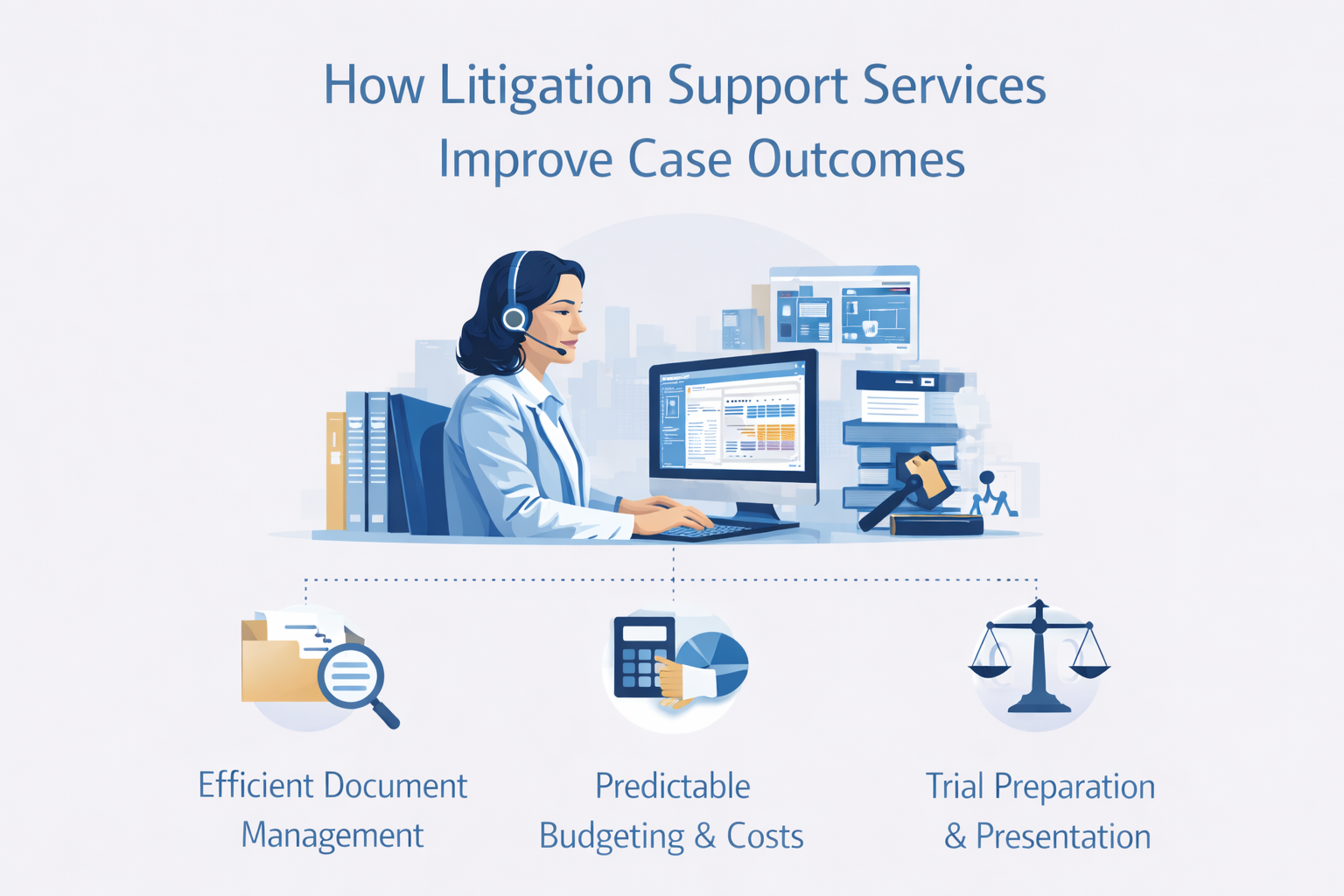
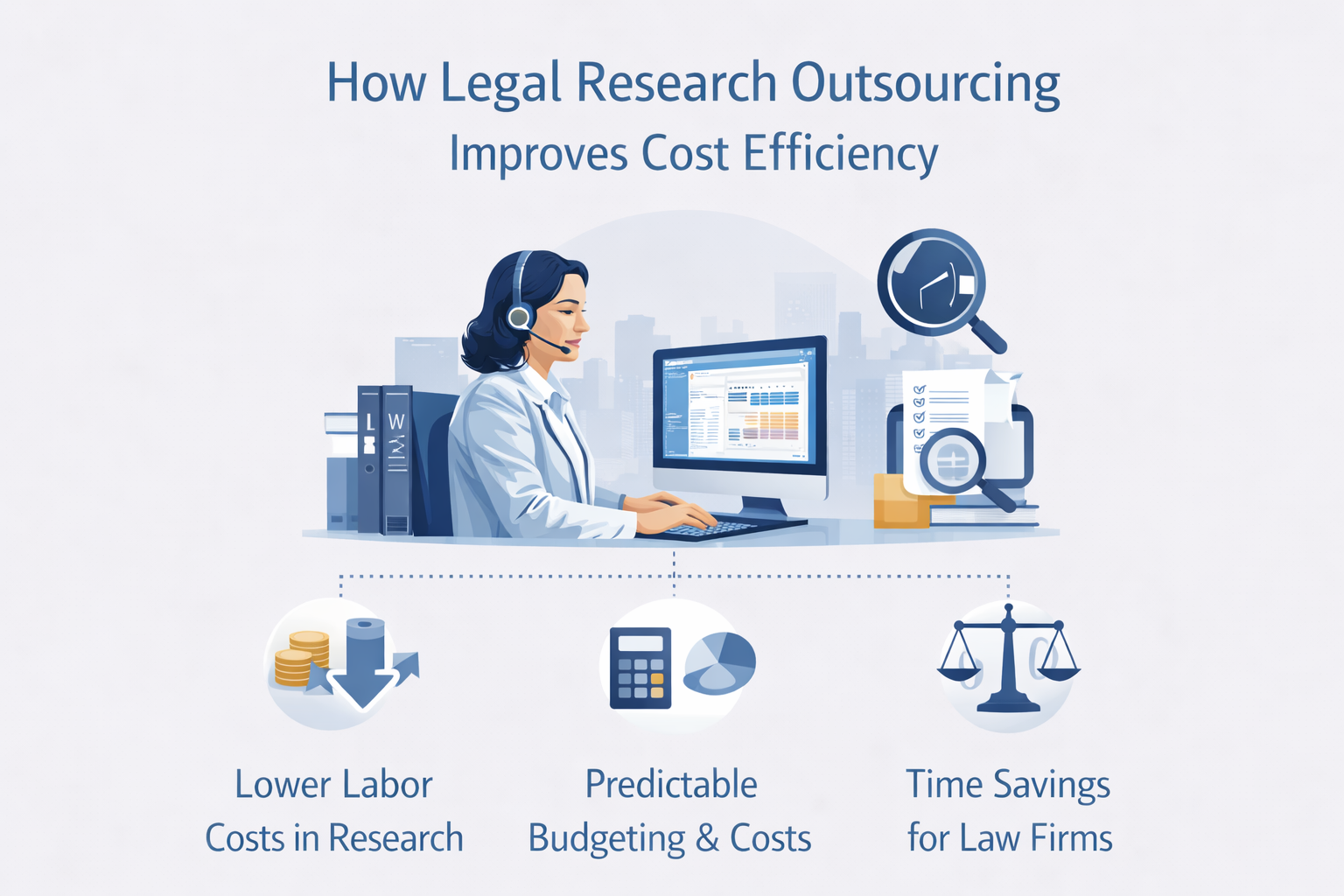
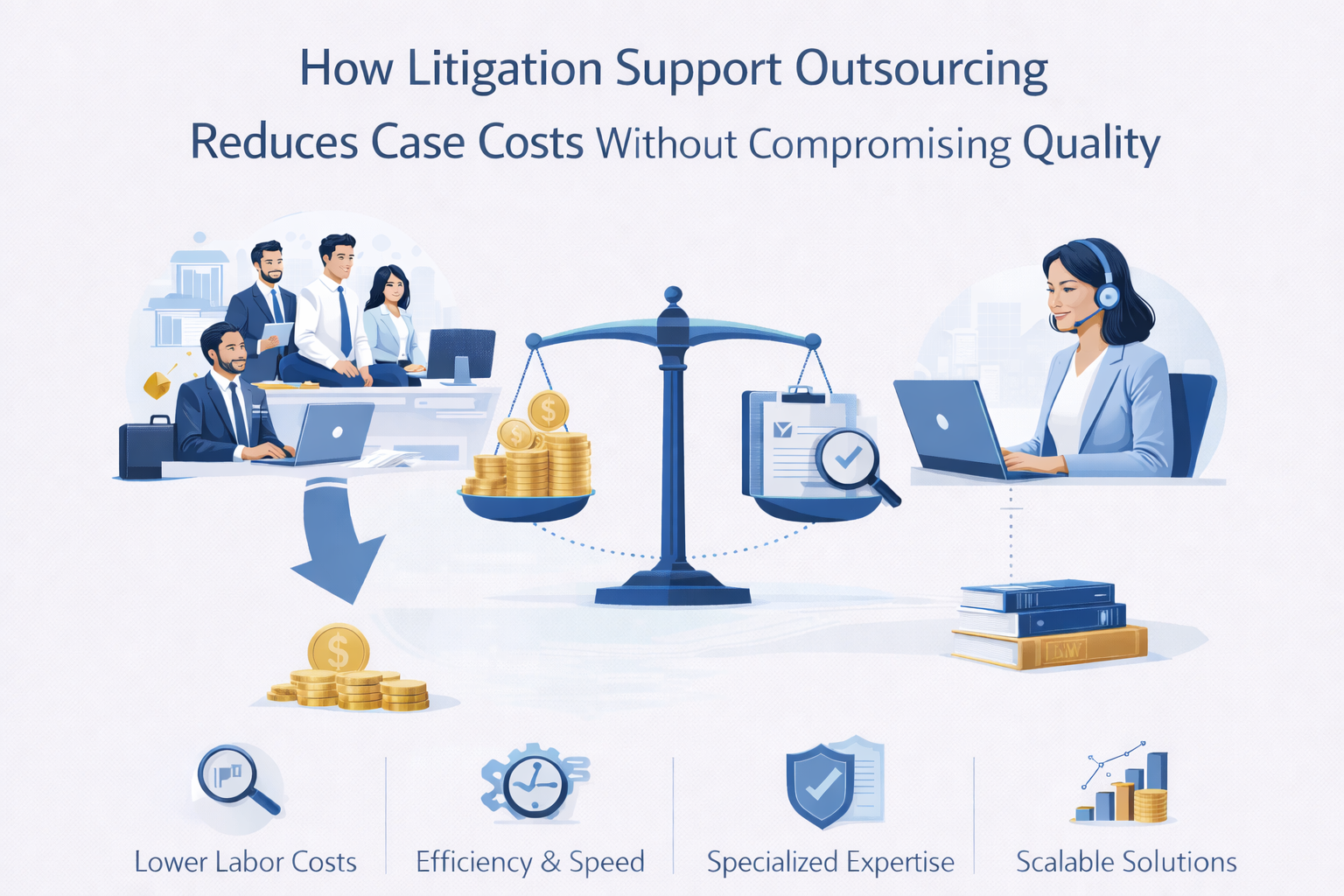
    How Litigation Support Outsourcing Reduces Case Costs Without Compromising Quality

    Litigation is expensive. There is no getting around it.

    Between attorney fees, expert witnesses, court costs, and discovery expenses, the average commercial litigation case can easily exceed $100,000 and complex matters routinely climb into the millions. For law firms operating on contingency or fixed-fee arrangements, cost management is not just good business practice it’s the difference between profitability and losing money on a case.

    Yet many firms continue to approach litigation support the same way they always have: billing attorney and paralegal time for tasks like document review, deposition summaries, exhibit preparation, and legal research work that’s essential but doesn’t require the strategic thinking that justifies premium billing rates.

    The math is straightforward but uncomfortable. When associates billing $250-400/hour spend days reviewing discovery documents or summarizing medical records, case costs balloon rapidly. When partners billing $400-600/hour handle routine pleading drafts or timeline preparation, margins evaporate.

    There’s a better approach one that reduces litigation costs by 40-60% while maintaining (and often improving) work quality: strategic litigation support outsourcing.

    The Cost Structure Problem in Modern Litigation

    To understand how outsourcing reduces costs, we first need to acknowledge where litigation expenses actually go.

    A typical litigation cost breakdown:

    • Discovery and document review: 30-40% of total case costs
    • Attorney time (legal research, drafting, strategy): 25-35%
    • Depositions and court appearances: 15-20%
    • Expert witnesses: 10-15%
    • Court costs and filing fees: 5-10%
    • Miscellaneous (travel, copies, technology): 5-10%

    Notice that discovery and document review the single largest cost category involves work that’s necessary, time-consuming, and detail-oriented, but rarely requires the nuanced legal judgment that distinguishes experienced attorneys from trained support professionals.

    The traditional staffing model:

    • Partners ($400-600/hour): Case strategy, key depositions, court appearances, client management
    • Senior associates ($300-400/hour): Research, drafting, discovery management, witness prep
    • Junior associates ($200-300/hour): Document review, pleading preparation, research assistance
    • Paralegals ($100-150/hour): Administrative support, filing, scheduling, basic research

    Even when firms delegate appropriately, they’re still paying $200-300/hour for document review and summarization work. On a case with 10,000 documents requiring review, that’s $40,000-60,000 in billable time before any substantive legal work begins.

    The outsourcing alternative:

    Litigation support outsourcing provides access to trained legal professionals paralegals, legal assistants, and document review specialists at $30-75/hour, depending on complexity and expertise required.

    Same work. Same quality standards. 60-75% cost reduction.

    The savings compound quickly across every aspect of litigation support.

    Where Litigation Support Outsourcing Delivers Maximum Impact

    Let’s examine the specific litigation support functions where outsourcing provides the greatest cost reduction and efficiency gains.

    1. Discovery and Document Review

    The challenge: Modern litigation produces massive document volumes emails, contracts, internal communications, financial records, technical documents. Every page requires review for relevance, privilege, and evidentiary value.

    Traditional approach: Junior associates and paralegals conduct first-level review at $150-300/hour. On cases with 50,000+ documents, costs easily exceed $100,000.

    Outsourcing approach: Specialized document review teams conduct systematic review using established protocols and e-discovery platforms. Associates focus only on complex privilege determinations and key documents.

    Cost impact:

    • Traditional: 50,000 documents × 2 minutes/document × $250/hour = $104,000
    • Outsourced: 50,000 documents × 2 minutes/document × $50/hour = $42,000
    • Savings: $62,000 (60% reduction)

    Quality advantage: Document review specialists develop expertise through high-volume exposure. They catch details that overwhelmed associates might miss. Systematic protocols ensure consistency across the entire document set.

    2. Deposition and Hearing Summaries

    The challenge: Depositions and hearings generate hundreds of pages of transcript. Attorneys need concise summaries highlighting key testimony, admissions, and inconsistencies.

    Traditional approach: Associates read full transcripts and prepare summaries, billing 3-5 hours per deposition at $250-350/hour.

    Outsourcing approach: Legal professionals experienced in deposition summary prepare organized, searchable summaries using page-line citations and topical indexing.

    Cost impact:

    • Traditional: 20 depositions × 4 hours × $300/hour = $24,000
    • Outsourced: 20 depositions × 4 hours × $50/hour = $4,000
    • Savings: $20,000 (83% reduction)

    Quality advantage: Specialized summarizers develop systematic approaches chronological, topical, or issue-based organization tailored to case needs. Consistent formatting makes cross-referencing efficient.

    3. Medical Records Review and Chronology

    The challenge: Personal injury, medical malpractice, and workers’ compensation cases involve extensive medical records treatment notes, diagnostic reports, surgical records, billing statements. Attorneys need organized chronologies showing treatment progression.

    Traditional approach: Paralegals or associates review records and create chronologies, billing 10-20 hours per plaintiff at $150-300/hour.

    Outsourcing approach: Medical records specialists trained in medical terminology prepare detailed chronologies with page citations, organizing information by provider, condition, or treatment type.

    Cost impact:

    • Traditional: 10 plaintiffs × 15 hours × $200/hour = $30,000
    • Outsourced: 10 plaintiffs × 15 hours × $40/hour = $6,000
    • Savings: $24,000 (80% reduction)

    Quality advantage: Specialists familiar with medical documentation identify relevant details attorneys might overlook. Consistent formatting across multiple plaintiffs enables pattern recognition.

    4. Legal Research and Memoranda

    The challenge: Every motion, brief, and legal strategy requires case law research, statutory analysis, and jurisdiction-specific precedent review.

    Traditional approach: Associates conduct research and draft memoranda at $250-400/hour. Complex research projects consume 10-30 hours.

    Outsourcing approach: Legal researchers with access to Westlaw, LexisNexis, and specialized databases conduct targeted research and prepare draft memoranda for attorney review.

    Cost impact:

    • Traditional: 15 research projects × 12 hours × $300/hour = $54,000
    • Outsourced: 15 research projects × 12 hours × $60/hour = $10,800
    • Savings: $43,200 (80% reduction)

    Quality advantage: Specialized researchers develop deep familiarity with research methodologies and database functionalities. They’re often more efficient than generalist associates who conduct research occasionally.

    5. Pleadings and Motion Drafting

    The challenge: Standard motions, discovery requests, and responsive pleadings require legal knowledge but follow predictable formats and arguments.

    Traditional approach: Associates draft from scratch or heavily modify previous pleadings, billing 5-10 hours per document at $250-350/hour.

    Outsourcing approach: Experienced legal drafters prepare initial drafts using jurisdiction-specific templates and case-specific facts. Attorneys review, refine, and finalize.

    Cost impact:

    • Traditional: 25 pleadings × 7 hours × $300/hour = $52,500
    • Outsourced: 25 pleadings × 7 hours × $50/hour = $8,750
    • Savings: $43,750 (83% reduction)

    Quality advantage: Drafters working exclusively on litigation documents develop template libraries and precedent files. Consistent formatting and argument structure across all filings.

    6. Trial Preparation and Exhibit Management

    The challenge: Trial preparation involves organizing evidence, preparing exhibit lists, creating trial binders, coordinating witness schedules, and assembling demonstrative aids.

    Traditional approach: Associates and paralegals handle trial prep at $150-300/hour. Major trials require 100-200 hours of preparation.

    Outsourcing approach: Trial support specialists organize exhibits, prepare indices, create binders, and coordinate logistics under attorney supervision.

    Cost impact:

    • Traditional: 150 hours × $200/hour = $30,000
    • Outsourced: 150 hours × $45/hour = $6,750
    • Savings: $23,250 (78% reduction)

    Quality advantage: Dedicated trial support professionals develop systematic organization approaches and quality control protocols. Details that overwhelmed teams might miss are caught through checklist-driven processes.

    7. Demand Letters and Settlement Packages

    The challenge: Personal injury and insurance cases require detailed demand letters supported by medical chronologies, treatment summaries, and damages calculations.

    Traditional approach: Attorneys or paralegals draft demand letters and compile supporting documentation at $150-300/hour, spending 8-15 hours per demand.

    Outsourcing approach: Legal professionals experienced in personal injury matters prepare comprehensive demand packages using firm templates and case-specific information.

    Cost impact:

    • Traditional: 40 demands × 10 hours × $200/hour = $80,000
    • Outsourced: 40 demands × 10 hours × $40/hour = $16,000
    • Savings: $64,000 (80% reduction)

    Quality advantage: Specialists working on high volumes of demand letters develop refined approaches to presentation, organization, and persuasive framing often achieving better settlement results.

    The Compounding Effect: Case-Level Cost Analysis

    To truly appreciate the impact of litigation support outsourcing, let’s examine total case costs across different litigation types.

    Example 1: Commercial Litigation Case

    Case profile: Contract dispute, moderate discovery (15,000 documents), 12 depositions, summary judgment motion, settlement before trial.

    Traditional cost structure:

    • Document review: $31,000 (15,000 docs × 2 min × $250/hr)
    • Deposition summaries: $14,400 (12 deps × 4 hrs × $300/hr)
    • Legal research (5 projects): $18,000 (5 × 12 hrs × $300/hr)
    • Pleadings and motions (15 docs): $31,500 (15 × 7 hrs × $300/hr)
    • Trial prep (not reached): $0
    • Total support costs: $94,900

    Outsourced cost structure:

    • Document review: $12,500 (15,000 docs × 2 min × $50/hr)
    • Deposition summaries: $2,400 (12 deps × 4 hrs × $50/hr)
    • Legal research (5 projects): $3,600 (5 × 12 hrs × $60/hr)
    • Pleadings and motions (15 docs): $5,250 (15 × 7 hrs × $50/hr)
    • Trial prep (not reached): $0
    • Total support costs: $23,750

    Savings: $71,150 (75% reduction in support costs)

    Example 2: Personal Injury Case (Plaintiff)

    Case profile: Auto accident, soft tissue injuries, medical records from 5 providers, insurance dispute, settled after demand.

    Traditional cost structure:

    • Medical records review/chronology: $3,000 (15 hrs × $200/hr)
    • Legal research (insurance coverage): $2,400 (8 hrs × $300/hr)
    • Demand letter and package: $2,000 (10 hrs × $200/hr)
    • Discovery responses: $2,100 (7 hrs × $300/hr)
    • Total support costs: $9,500

    Outsourced cost structure:

    • Medical records review/chronology: $600 (15 hrs × $40/hr)
    • Legal research (insurance coverage): $480 (8 hrs × $60/hr)
    • Demand letter and package: $400 (10 hrs × $40/hr)
    • Discovery responses: $350 (7 hrs × $50/hr)
    • Total support costs: $1,830

    Savings: $7,670 (81% reduction in support costs)

    Example 3: Employment Discrimination Litigation

    Case profile: Multi-plaintiff case, extensive email discovery (50,000 documents), 20 depositions, expert testimony, settled during trial.

    Traditional cost structure:

    • Document review: $104,000 (50,000 docs × 2 min × $250/hr)
    • Deposition summaries: $24,000 (20 deps × 4 hrs × $300/hr)
    • Legal research (8 projects): $28,800 (8 × 12 hrs × $300/hr)
    • Pleadings and motions (20 docs): $42,000 (20 × 7 hrs × $300/hr)
    • Trial preparation: $30,000 (150 hrs × $200/hr)
    • Total support costs: $228,800

    Outsourced cost structure:

    • Document review: $42,000 (50,000 docs × 2 min × $50/hr)
    • Deposition summaries: $4,000 (20 deps × 4 hrs × $50/hr)
    • Legal research (8 projects): $5,760 (8 × 12 hrs × $60/hr)
    • Pleadings and motions (20 docs): $7,000 (20 × 7 hrs × $50/hr)
    • Trial preparation: $6,750 (150 hrs × $45/hr)
    • Total support costs: $65,510

    Savings: $163,290 (71% reduction in support costs)

    Beyond Direct Cost Savings: The Multiplier Benefits

    While hourly rate differences drive the most obvious savings, litigation support outsourcing delivers additional benefits that compound cost advantages:

    1. Scalability Without Overhead

    Traditional model: Hiring additional associates or paralegals for case surges requires recruitment, training, benefits, and long-term commitments. Letting them go during slow periods is disruptive and expensive.

    Outsourcing model: Scale support up or down based on actual caseload. Handle discovery spikes without hiring. Manage seasonal fluctuations without layoffs.

    Value: Staffing costs align precisely with revenue. No paying for underutilized capacity during slow periods.

    2. 24/7 Productivity Through Global Delivery

    Traditional model: Work stops when the office closes. Rush projects require overtime or wait until morning.

    Outsourcing model: With global delivery teams, work continues around the clock. Submit document review requests at 5 PM, receive completed work by 8 AM.

    Value: Faster turnaround without overtime premiums. Meet tight deadlines without all-nighters.

    3. Specialized Expertise Without Training Investment

    Traditional model: Training associates on e-discovery platforms, deposition summary techniques, or medical terminology requires time and reduces billable capacity.

    Outsourcing model: Access specialists already trained and experienced in specific litigation support functions.

    Value: Immediate productivity. No billable hour loss for training. Consistent quality from day one.

    4. Technology Access Without Capital Investment

    Traditional model: E-discovery platforms, document review tools, and case management systems require licensing fees, IT infrastructure, and maintenance.

    Outsourcing model: Many providers include technology access as part of service delivery no separate licensing or infrastructure costs.

    Value: Reduce technology overhead while accessing enterprise-grade tools.

    5. Improved Attorney Utilization and Satisfaction

    Traditional model: Associates spend 40-60% of time on document review, research, and drafting work that doesn’t develop trial skills or client relationships.

    Outsourcing model: Associates focus on depositions, motion arguments, client strategy, and courtroom advocacy work that builds careers and justifies premium rates.

    Value: Better attorney retention. Higher job satisfaction. More effective skill development.

    6. Predictable Budgeting for Fixed-Fee and Contingency Cases

    Traditional model: Difficult to estimate support costs accurately. Discovery volume surprises create budget overruns.

    Outsourcing model: Transparent, predictable pricing enables accurate case budgeting. Fixed-price options available for defined scopes.

    Value: No budget surprises. Better case acceptance decisions based on realistic cost projections.

    Addressing Concerns: Quality, Confidentiality, and Control

    Despite clear cost advantages, some firms hesitate to outsource litigation support. Let’s address the most common concerns directly.

    “Quality will suffer if we outsource”

    Reality: Outsourcing providers specializing in litigation support maintain rigorous quality control often exceeding internal standards:

    • Trained, experienced legal professionals with subject matter expertise
    • Documented procedures and quality assurance protocols
    • Multi-level review processes before work product delivery
    • Performance metrics and continuous improvement programs

    Many firms find outsourced work more consistent than internal production because specialists develop refined methodologies through high-volume exposure.

    “Confidentiality and privilege are too risky”

    Reality: Reputable litigation support providers implement comprehensive security measures:

    • Encrypted data transmission and storage
    • Secure access controls and user authentication
    • Background checks and confidentiality agreements for all personnel
    • Compliance with attorney-client privilege requirements
    • Regular security audits and certifications

    Often, outsourced systems are more secure than local servers or paper-based processes. Providers understand that confidentiality breaches would destroy their business they have every incentive to maintain stringent security.

    “We’ll lose control over case strategy and execution”

    Reality: Outsourcing handles execution, not strategy. Attorneys maintain complete control:

    • Define review protocols and criteria
    • Approve all templates and work product
    • Direct research questions and legal arguments
    • Review all deliverables before use
    • Escalate complex issues immediately

    Think of outsourcing as extending your team’s capacity, not replacing your judgment.

    “Opposing counsel and clients won’t accept outsourced work”

    Reality: Sophisticated clients and opposing counsel care about results, not production methods:

    • Corporate clients increasingly require cost-effective litigation management
    • Many general counsel actively encourage efficient resource deployment
    • Opposing counsel rarely knows (or cares) about your back-office operations
    • What matters: accuracy, thoroughness, and timely delivery

    Courts have consistently endorsed appropriate outsourcing of litigation support functions, provided attorney supervision and quality control are maintained.

    “Communication and coordination will be difficult”

    Reality: Modern collaboration tools make remote teams seamless:

    • Video conferencing for complex discussions
    • Shared document platforms for real-time collaboration
    • Project management dashboards for status visibility
    • Dedicated points of contact for responsive communication

    Many firms find outsourced teams more responsive than overloaded internal staff.

    “Our cases are too complex or specialized”

    Reality: The best litigation support providers specialize by practice area:

    • Personal injury specialists understand medical records and damages calculations
    • Intellectual property teams handle technical patents and prior art research
    • Employment law experts navigate discrimination and retaliation claims
    • Securities litigation specialists manage financial document review

    Specialized providers often have more relevant experience than generalist associates.

    How to Select the Right Litigation Support Partner

    Not all outsourcing providers deliver equal value. When evaluating potential partners, prioritize these critical factors:

    Litigation-Specific Expertise

    Do they understand litigation workflows, not just general legal work? Look for teams with paralegal certifications, litigation experience, and practice area specialization.

    Technology Capabilities

    Can they work with your e-discovery platforms (Relativity, Everlaw, Logikcull), case management systems (Clio, MyCase), and document review tools? Native platform compatibility eliminates friction.

    Security and Compliance

    What protocols protect attorney-client privilege and confidential information? Verify encryption standards, access controls, and compliance certifications (SOC 2, ISO 27001).

    Scalability and Flexibility

    Can they handle volume spikes without quality degradation? Do they offer multiple engagement models (hourly, project-based, dedicated resources)?

    Quality Control Processes

    What review procedures ensure accuracy? How do they handle errors or revisions? Look for multi-level review, documented procedures, and performance guarantees.

    Communication and Responsiveness

    Will you have a dedicated account manager? How quickly do they respond? Time-zone overlap matters for real-time collaboration.

    Transparent Pricing

    Are costs clear and predictable? Hidden fees and variable pricing create budget uncertainty. The best providers offer straightforward rate cards.

    References and Track Record

    Do they have verifiable experience with cases similar to yours? Request references from law firms handling comparable litigation.

    Getting Started: A Practical Implementation Approach

    Transitioning to litigation support outsourcing doesn’t require an all-or-nothing commitment. The most successful firms start small and expand based on results.

    Phase 1: Pilot Project (First 30 days)

    Start with one clear use case:

    • Document review for a single case
    • Deposition summaries for upcoming depositions
    • Medical chronology for a personal injury matter
    • Legal research for a specific motion

    Establish success criteria:

    • Quality meets or exceeds internal standards
    • Turnaround time is faster than internal production
    • Cost is 50%+ lower than internal rates
    • Communication is responsive and clear

    Monitor and measure:

    • Track actual costs vs. projected internal costs
    • Review work product quality systematically
    • Gather attorney feedback on usability
    • Document lessons learned

    Phase 2: Controlled Expansion (Months 2-3)

    If pilot succeeds, expand to additional functions:

    • Add more cases of the same type
    • Incorporate different support functions
    • Test different engagement models (hourly vs. project-based)

    Continue measuring performance and refining processes.

    Phase 3: Strategic Integration (Months 4-6)

    Incorporate outsourcing into standard case management:

    • Build outsourcing into case budgets and timelines
    • Train attorneys on effective delegation
    • Develop streamlined request and review workflows
    • Establish ongoing provider relationships

    Phase 4: Optimization (Ongoing)

    Continuously improve efficiency and value:

    • Analyze cost savings and quality metrics
    • Refine templates and protocols
    • Expand to additional practice areas
    • Negotiate volume-based pricing as relationship matures

    The Competitive Reality: Adapt or Get Priced Out

    Here’s the uncomfortable truth: litigation is becoming more cost-competitive, and clients have more choices than ever.

    The market dynamics pushing change:

    • Corporate clients demanding cost certainty: More companies require fixed-fee or capped-fee arrangements. Firms that can’t deliver profitably lose business.
    • Alternative legal service providers (ALSPs) growing: LegalZoom, Axiom, and other ALSPs offer litigation support at fraction of traditional law firm rates.
    • Technology-enabled competitors: Forward-thinking firms leveraging outsourcing can undercut traditional pricing while maintaining quality.
    • Client sophistication increasing: General counsel understand litigation economics. They demand efficient resource deployment and question associate-level document review billing.

    Firms that continue operating with traditional cost structures will find themselves uncompetitive either losing cases to lower-cost competitors or accepting work at margins that don’t sustain the practice.

    The Bottom Line: Strategic Cost Management Enables Better Litigation

    Litigation support outsourcing isn’t about cutting corners or compromising quality. It’s about deploying resources intelligently paying appropriate rates for appropriate work.

    When document review, deposition summaries, legal research, and pleading preparation are handled by specialized professionals at cost-effective rates, everything changes:

    • Case economics improve dramatically: 40-60% reduction in support costs makes more cases financially viable
    • Attorney time focuses on high-value work: Strategy, depositions, motion arguments, client relationships
    • Scalability becomes possible: Handle volume fluctuations without staffing chaos
    • Clients receive better value: Lower costs without quality reduction
    • Competitive positioning strengthens: Offer better pricing than firms stuck in traditional models

    The question isn’t whether litigation support outsourcing can reduce costs the data is overwhelming. The question is whether your firm will adopt these approaches proactively or be forced to by competitive pressure.

    The most successful litigation practices combine in-house attorney expertise for strategy and high-stakes work with outsourced support for systematic execution creating a hybrid model that delivers superior results at sustainable costs.

    That’s not the future of litigation. That’s the present and firms embracing it are winning the cases their competitors can’t afford to handle.

    Ready to reduce litigation costs without compromising quality?

    Connect with FourFold LPO to explore how specialized litigation support outsourcing can transform your case economics while maintaining the standards your clients expect.
  • The Role of E-Discovery in Modern Litigation Support

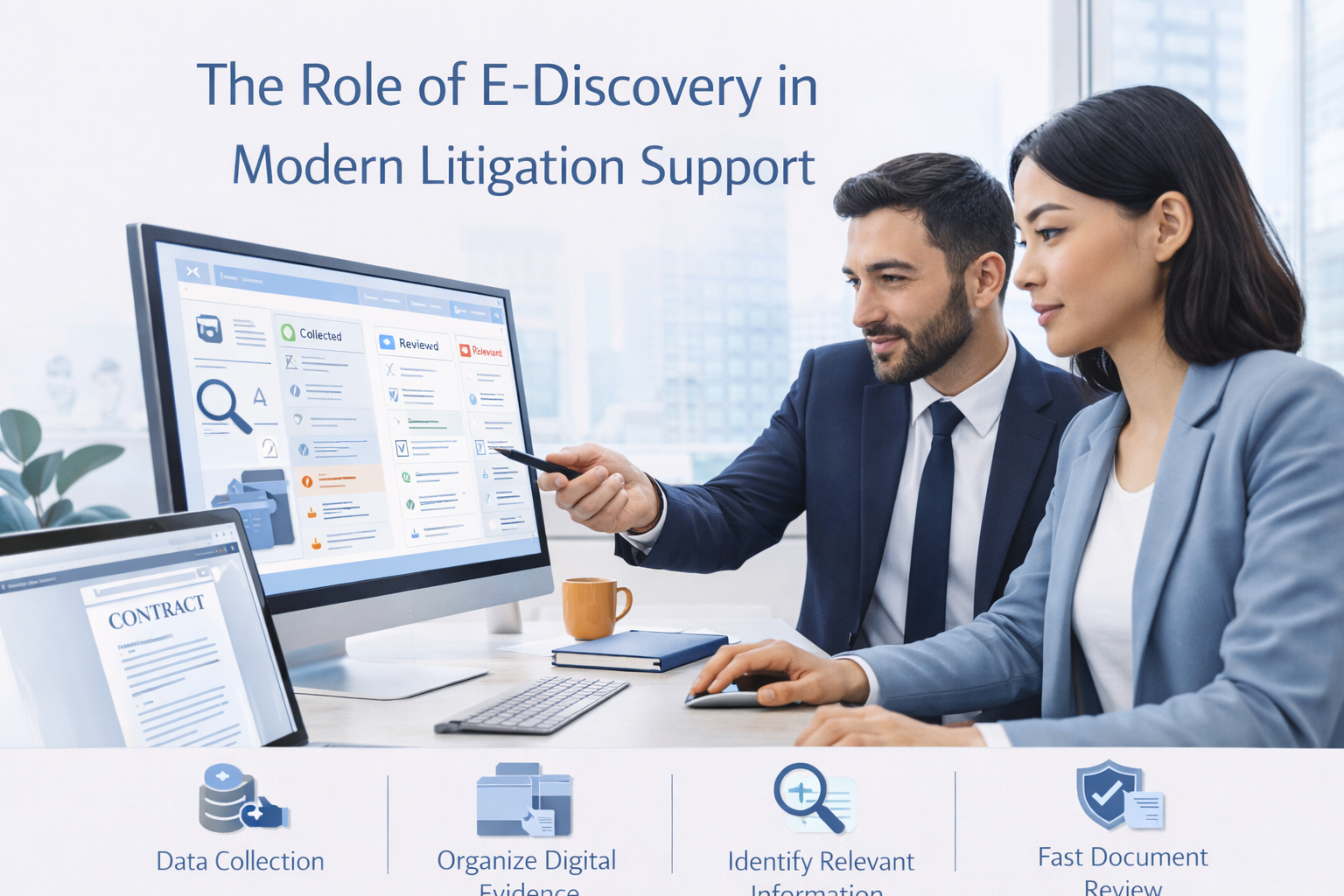
    The Role of E-Discovery in Modern Litigation Support

    The landscape of litigation has fundamentally transformed over the past two decades. Where attorneys once reviewed boxes of paper documents, todays legal disputes involve terabytes of electronic data emails, text messages, social media posts, cloud storage, metadata, and digital communications that can make or break a case.

    E-discovery the process of identifying, collecting, reviewing, and producing electronically stored information (ESI) in legal proceedings has evolved from a specialized niche to an essential component of virtually every litigation matter. Understanding e-discovery’s role in modern litigation support is no longer optional for law firms seeking to effectively represent clients and manage cases efficiently.

    What Is E-Discovery?

    E-discovery encompasses the entire lifecycle of managing electronic evidence in litigation, arbitration, investigations, and regulatory matters. The process typically follows the Electronic Discovery Reference Model (EDRM), which outlines key phases:

    Identification: Locating potential sources of relevant ESI across multiple systems, devices, and platforms.

    Preservation: Implementing legal holds to prevent deletion or alteration of potentially relevant data.

    Collection: Gathering ESI from identified sources in a forensically sound manner that maintains data integrity.

    Processing: Filtering, de-duplicating, and culling data to reduce volume and extract relevant information.

    Review: Analyzing documents for relevance, privilege, and responsiveness to discovery requests.

    Production: Delivering discoverable materials to opposing parties in appropriate formats with proper metadata.

    Presentation: Organizing and presenting evidence effectively for depositions, hearings, and trial.

    Each phase requires specialized expertise, technology platforms, and systematic processes to manage effectively which is why e-discovery has become a critical element of litigation support.

    Why E-Discovery Matters in Modern Litigation

    The volume and complexity of electronic evidence in contemporary cases has made traditional document review methods obsolete. Consider the realities of modern discovery:

    Data Volume: A single custodian may have hundreds of thousands of emails, documents, and files. Complex commercial litigation can involve millions of documents across dozens of custodians.

    Data Diversity: Evidence now exists in numerous formats emails, attachments, spreadsheets, presentations, databases, social media, instant messages, mobile devices, collaboration platforms, and cloud storage.

    Metadata Significance: Beyond document content, metadata (creation dates, modification history, email headers, geolocation data) often provides critical evidence of timing, authorship, and document handling.

    Speed Requirements: Modern discovery timelines demand rapid review and production often requiring teams to process and analyze thousands of documents weekly.

    Cost Considerations: Manual review of massive data volumes at attorney hourly rates can cost hundreds of thousands or even millions of dollars, making cost-effective e-discovery solutions essential.

    Sanctions Risk: Failure to properly preserve, collect, or produce ESI can result in severe sanctions, adverse inferences, or case dismissal.

    Effective e-discovery support has become as fundamental to litigation success as legal research and motion practice.

    Core Components of E-Discovery Support

    Modern litigation support services provide comprehensive e-discovery capabilities that address each phase of the process:

    Data Collection and Preservation

    Professional e-discovery support begins with implementing litigation holds and collecting data in forensically defensible ways. This includes:

    • Coordinating with IT departments and custodians to identify relevant data sources
    • Implementing preservation protocols to prevent spoliation
    • Collecting data from email servers, file shares, mobile devices, and cloud platforms
    • Maintaining chain of custody documentation
    • Preserving metadata and maintaining data integrity

    Data Processing and Filtering

    Raw data collection produces enormous volumes that must be reduced to manageable, relevant subsets:

    • De-duplication to eliminate redundant copies
    • Email threading to group related communications
    • Date filtering to focus on relevant time periods
    • Keyword filtering and search term optimization
    • File type filtering to exclude system files and irrelevant formats
    • Conceptual clustering to identify document families and themes

    Document Review and Analysis

    The review phase involves analyzing processed documents for relevance, privilege, and strategic significance:

    • Responsiveness review to identify discoverable documents
    • Privilege review to protect attorney-client communications and work product
    • Issue coding to tag documents by legal issue, witness, or chronology
    • Hot document identification for key evidence
    • Quality control to ensure review consistency and accuracy
    • Redaction of confidential or protected information

    Production and Presentation

    Once review is complete, responsive documents must be produced appropriately:

    • Production format negotiation (PDF, native, TIFF)
    • Bates numbering and production tracking
    • Privilege log preparation
    • Load file creation for opposing counsel’s review platform
    • Production verification and quality assurance
    • Organization of exhibits for depositions and trial

    Technology-Assisted Review: The E-Discovery Revolution

    Traditional linear review attorneys reading every document sequentially has become economically unsustainable for large-scale discovery. Technology-assisted review (TAR) has transformed e-discovery efficiency:

    Predictive Coding: Machine learning algorithms analyze attorney-reviewed documents and predict relevance for remaining unreviewed materials, dramatically reducing review time and cost.

    Concept Clustering: AI groups conceptually similar documents together, allowing reviewers to quickly identify document families and make consistent relevance decisions.

    Email Threading: Advanced algorithms identify complete email conversations, eliminating redundant review of duplicated email chains.

    Advanced Analytics: Data visualization, communication pattern analysis, and timeline construction reveal relationships and evidence patterns that manual review might miss.

    These technologies don’t replace attorney judgment they enhance it, allowing legal teams to focus review efforts on the most significant documents while managing massive volumes cost-effectively.

    E-Discovery Across Practice Areas

    While e-discovery emerged from complex commercial litigation, it now plays critical roles across virtually all practice areas:

    Personal Injury: Text messages, social media posts, medical records, and surveillance footage often provide crucial evidence of liability and damages.

    Family Law: Emails, financial records, text communications, and social media content frequently become central to custody, support, and asset division disputes.

    Employment Litigation: Email communications, personnel files, timekeeping records, and internal messaging platforms document workplace conduct and policy enforcement.

    Intellectual Property: Source code, development emails, design documents, and file metadata establish invention dates, authorship, and potential infringement.

    White Collar Criminal Defense: Financial records, email communications, and document metadata are essential to investigating alleged fraud, embezzlement, or regulatory violations.

    Regulatory Compliance: Government investigations require comprehensive ESI production demonstrating compliance with regulations and industry standards.

    No practice area is immune from e-discovery demands in today’s digital environment.

    The Cost-Benefit Analysis of E-Discovery Outsourcing

    Many law firms face a critical decision: build internal e-discovery capabilities or outsource to specialized providers. The economics strongly favor outsourcing for most firms:

    Technology Investment: E-discovery platforms can cost $50,000 to $500,000+ annually, plus implementation and training costs expenses that only make sense for the highest-volume practices.

    Specialized Expertise: E-discovery requires technical knowledge of data formats, forensic collection, processing software, and review platforms that generalist staff typically lack.

    Scalability: Discovery volumes fluctuate dramatically between matters. Outsourcing provides instant scalability without maintaining excess capacity during slow periods.

    Cost Efficiency: Outsourced review teams provide experienced document reviewers at significantly lower rates than using associate attorneys for first-level review.

    Risk Management: Professional e-discovery providers maintain quality control processes, defensible methodologies, and documentation that reduce sanctions risk.

    Speed: Dedicated e-discovery teams can scale up quickly to meet aggressive production deadlines that would overwhelm in-house staff.

    For most firms, outsourcing e-discovery support delivers superior results at lower total cost while allowing attorneys to focus on case strategy rather than data management.

    Key Considerations When Selecting E-Discovery Support

    Not all e-discovery providers offer equivalent capabilities. When evaluating potential partners, law firms should assess:

    Technology Platform: Do they use industry-standard platforms (Relativity, Everlaw, Logikcull) that ensure compatibility and efficiency?

    Data Security: What protocols protect sensitive client data? Look for encryption, secure data centers, access controls, and compliance with privacy regulations.

    Review Team Expertise: Are reviewers experienced with your practice areas? Do they understand legal concepts, privilege, and the nuances of different case types?

    Quality Control: What processes ensure review consistency and accuracy? How are disagreements and edge cases handled?

    Project Management: Will you have a dedicated point of contact? How do they handle communication, progress reporting, and deadline management?

    Pricing Transparency: Are costs clearly structured? Watch for hidden fees, minimum volumes, or platform access charges.

    Flexibility: Can they scale quickly for rush productions? Do they offer various engagement models to match your needs?

    Track Record: Can they provide references from law firms with similar practice areas and case types?

    Best Practices for Effective E-Discovery

    Successful e-discovery requires collaboration between law firms and their support partners:

    Early Planning: Discuss e-discovery scope, timelines, and strategy during case assessment not as production deadlines loom.

    Clear Communication: Provide detailed review protocols, definitions of relevance, and examples of privileged materials to ensure consistent decision-making.

    Iterative Review: Start with sample sets to calibrate review approach before processing full data volumes.

    Cost Management: Use processing and filtering strategically to reduce review volumes before engaging expensive attorney review.

    Preservation Diligence: Implement litigation holds immediately and document preservation efforts to defend against spoliation claims.

    Production Negotiation: Work with opposing counsel on production formats, timing, and scope to avoid unnecessary expenses and disputes.

    Technology Leverage: Use TAR and analytics for large-scale matters to dramatically reduce costs while improving review quality.

    The Future of E-Discovery

    E-discovery continues to evolve rapidly as technology advances:

    Artificial Intelligence: Machine learning and natural language processing will increasingly automate relevance determinations and privilege review.

    Cloud-Based Platforms: Browser-based review platforms provide instant access and collaboration without software installation.

    Mobile and Ephemeral Data: Discovery now encompasses text messages, social media, collaboration platforms, and even disappearing messages.

    International Data: Cross-border litigation requires navigating GDPR, data localization requirements, and conflicting privacy regulations.

    Real-Time Discovery: Some matters now involve ongoing discovery of streaming data and continuously generated content.

    Law firms that partner with e-discovery providers staying current with these developments gain significant competitive advantages in handling complex litigation efficiently.

    The Strategic Imperative

    E-discovery has evolved from a technical specialty to a core competency for modern litigation practice. The ability to efficiently manage electronic evidence identifying key documents, controlling costs, meeting production deadlines, and avoiding sanctions often determines case outcomes as much as legal arguments.

    For most law firms, developing this competency internally is neither practical nor cost-effective. Strategic partnerships with specialized e-discovery support providers deliver the technology, expertise, and scalability needed to handle discovery demands while allowing attorneys to focus on legal strategy and client advocacy.

    In an environment where discovery can make or break cases and where mishandling ESI can result in devastating sanctions professional e-discovery support has become essential infrastructure for competitive litigation practice.

    Need comprehensive e-discovery and litigation support? FourFold LPO provides end-to-end discovery services including document review, data processing, privilege review, and production support across all practice areas. Our experienced legal professionals and advanced technology platforms help law firms manage discovery efficiently, control costs, and meet aggressive deadlines while maintaining the highest quality standards. Contact us today to discuss how our litigation support services can strengthen your practice and improve case outcomes.

  • Contract Lifecycle Management: A Smarter Legal Workflow

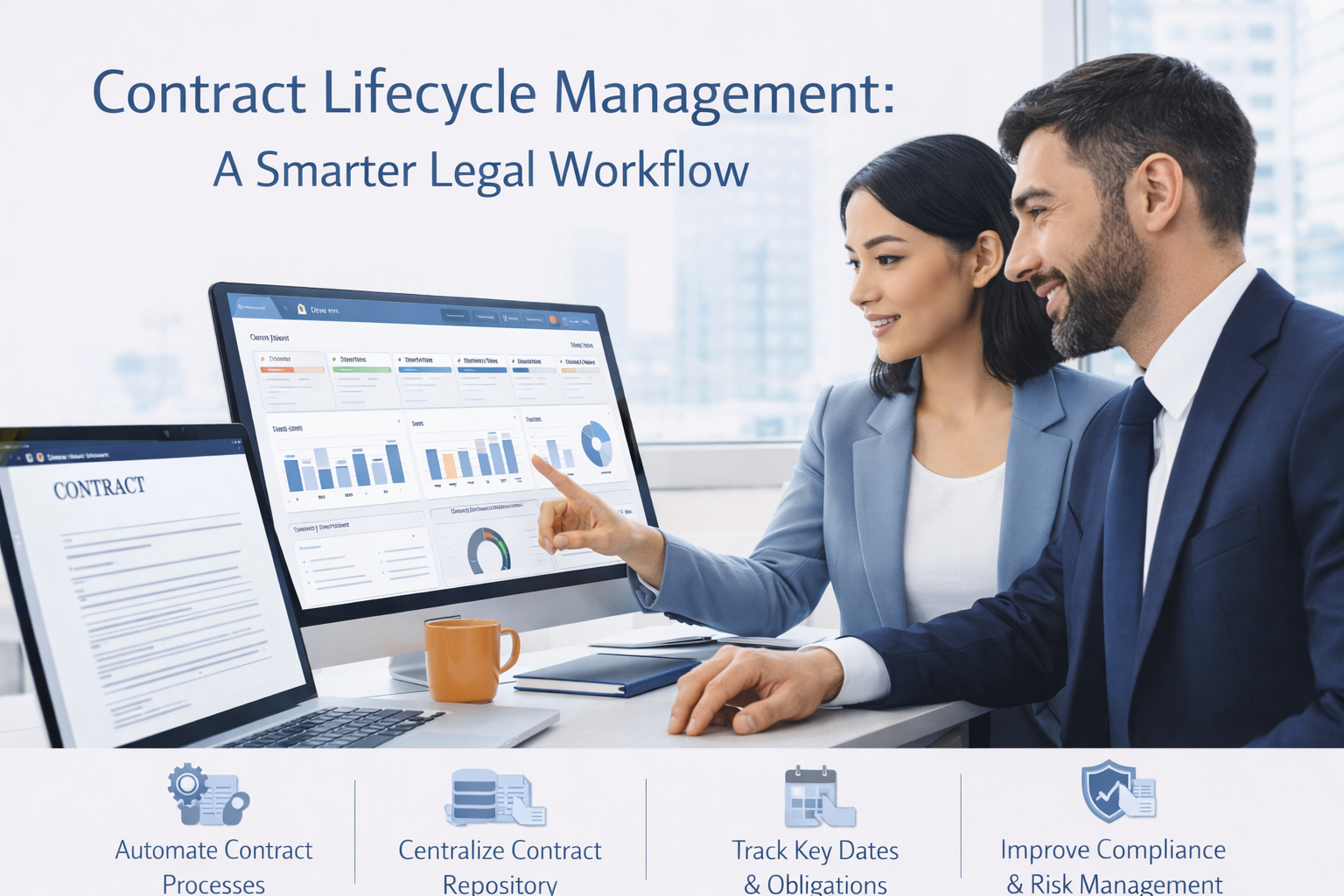
    Contract Lifecycle Management: A Smarter Legal Workflow

    Contracts are the foundation of business relationships governing partnerships, protecting interests, defining obligations, and mitigating risk. Yet for many law firms and businesses, contract management remains one of the most frustrating and inefficient operational challenges.

    The symptoms are familiar: contracts lost in email threads, version control chaos, missed renewal deadlines, inconsistent clause language, hours spent searching for executed agreements, and the nagging uncertainty about what obligations are actually in effect.

    It’s not a personnel problem. It’s a process problem.

    Traditional contract management relying on manual tracking, scattered file storage, and reactive responses to deadlines simply can’t keep pace with the volume and complexity of modern business agreements. The result? Unnecessary risk, wasted time, missed opportunities, and contracts that create more friction than value.

    Contract Lifecycle Management (CLM) offers a fundamentally different approach: a systematic, technology-enabled framework that manages contracts from initial request through execution, compliance monitoring, renewal, and eventual termination ensuring visibility, consistency, and strategic control at every stage.

    For organizations serious about operational excellence, CLM isn’t just a better way to handle contracts. It’s a competitive necessity.

    The Hidden Cost of Manual Contract Management

    Before exploring what effective CLM looks like, let’s be honest about what happens without it.

    The typical manual contract workflow:

    1. Someone requests a contract (often via email or verbal request)
    2. Legal drafts from scratch or searches for a similar previous agreement
    3. Multiple rounds of internal review and revision
    4. Counterparty negotiation through email attachments (Version_Final_v3_FINAL_Really.docx)
    5. Execution via wet signatures, digital signatures, or some combination
    6. Filing in a shared drive, filing cabinet, or inbox folder
    7. Hope that someone remembers renewal dates, compliance obligations, or termination windows

    The predictable failures:

    • Lost visibility: Nobody knows what contracts exist, what terms were agreed to, or where documents are stored
    • Version control disasters: Multiple people editing different versions, with no clear record of what was actually executed
    • Missed deadlines: Auto-renewal clauses trigger, termination windows close, compliance obligations go unmet
    • Inconsistent terms: Each agreement reinvents the wheel, creating unnecessary legal exposure and negotiation complexity
    • Slow turnaround: Simple contracts take weeks because every document starts from scratch
    • Duplicated effort: Teams waste time searching for templates, recreating clauses, and reformatting documents
    • Audit nightmares: When regulators, auditors, or litigators request contracts, the scramble begins
    • Strategic blindness: Leadership can’t answer basic questions about contractual obligations, exposure, or opportunities

    The cost isn’t just inefficiency it’s risk. Missed termination windows cost money. Untracked compliance obligations create liability. Lost contracts undermine negotiations.

    Organizations operating without effective CLM are gambling that nothing important will slip through the cracks. It’s not a question of if, but when.

    What Contract Lifecycle Management Actually Means

    Contract Lifecycle Management is the systematic approach to managing contracts through their entire lifecycle from initial request and drafting, through negotiation and execution, to ongoing compliance monitoring, renewal management, and eventual termination.

    Effective CLM combines three critical elements:

    1. Standardized Processes

    Clear workflows that define how contracts move through each stage, who is responsible for what, and how approvals are documented. No more confusion about “who’s handling this?” or “what’s the status?”

    2. Technology Infrastructure

    Centralized contract repositories, automated workflows, template libraries, version control, and reporting dashboards that provide visibility and eliminate manual tracking.

    3. Specialized Expertise

    Trained legal professionals who understand contract drafting, risk assessment, clause analysis, and compliance monitoring whether in-house or through strategic outsourcing.

    When these three elements work together, contract management transforms from reactive firefighting to proactive strategic control.

    The Contract Lifecycle: Stage by Stage

    Let’s walk through what best-practice CLM looks like at each stage of the contract lifecycle.

    Stage 1: Contract Request and Intake

    Traditional approach: Someone emails legal asking for “a contract.” Legal spends time clarifying what’s actually needed, gathering basic information, and determining urgency.

    CLM approach: Standardized intake forms capture essential information upfront—contract type, parties involved, key terms, business justification, timeline. Requests route automatically to the appropriate legal resource based on contract category and complexity.

    Value: Faster response, complete information from the start, proper prioritization, and clear tracking of all requests.

    Stage 2: Contract Drafting and Assembly

    Traditional approach: Attorney starts with a blank document or searches email/shared drives for a similar previous contract. Recreates standard clauses. Reformats. Hours invested in work that’s been done dozens of times before.

    CLM approach: Approved templates with pre-negotiated clauses and variable fields. Standard agreements can be assembled in minutes instead of hours. Custom agreements start from the closest template with proven language. Clause libraries ensure consistency and reduce risk.

    Value: 60-80% time savings on standard contracts. Consistent language across all agreements. Reduced legal exposure from ad-hoc drafting.

    Stage 3: Internal Review and Approval

    Traditional approach: Draft circulates via email to stakeholders. Feedback comes in different formats. Multiple versions proliferate. Consolidating comments and tracking approvals becomes a project unto itself.

    CLM approach: Automated routing sends contracts to appropriate reviewers based on type, value, and risk level. All comments tracked in one system. Clear approval workflow with documented sign-offs. Version history maintained automatically.

    Value: Faster approval cycles. Clear accountability. No more version confusion. Complete audit trail.

    Stage 4: Negotiation and Redlining

    Traditional approach: Redlined versions exchanged via email. Legal counsel manually tracks changes, compares versions, manages negotiation history across email threads.

    CLM approach: Centralized negotiation workspace with version comparison tools. All redlines and comments tracked. Negotiation history visible at a glance. Fallback positions and approved alternatives documented.

    Value: Faster negotiations. Clear visibility into what changed and why. Reduced risk of accepting unfavourable terms inadvertently.

    Stage 5: Execution and Storage

    Traditional approach: Printed contracts signed via wet signature, scanned, saved to various locations. Or emailed for e-signature with executed copies filed in multiple places. Nobody quite sure which version is “final executed.”

    CLM approach: Integrated e-signature workflow. Executed contracts automatically stored in centralized repository with metadata (parties, effective date, contract type, key terms). One authoritative source for all executed agreements.

    Value: No more searching for signed contracts. Instant access for authorized users. Clear record of what was actually executed.

    Stage 6: Obligation Management and Compliance

    Traditional approach: Hope someone remembers that deliverables are due, insurance certificates need updating, or compliance reports must be submitted. Obligations tracked in individual calendars (if at all).

    CLM approach: Key obligations extracted and tracked in contract management system. Automated alerts for upcoming deadlines. Compliance checklists tied to contract terms. Dashboard visibility into all open obligations.

    Value: No missed deadlines. Proactive compliance management. Reduced liability from unfulfilled obligations.

    Stage 7: Performance Monitoring and Amendments

    Traditional approach: Contract sits in a file. Performance issues arise. Amendments negotiated reactively. No systematic tracking of contract modifications.

    CLM approach: Performance metrics tracked against contract terms. Issues flagged proactively. Amendment process follows same workflow as original contract. All modifications linked to parent agreement.

    Value: Early identification of performance issues. Complete history of contract evolution. Strategic leverage in renegotiations.

    Stage 8: Renewal and Termination

    Traditional approach: Auto-renewal clauses trigger without decision-maker awareness. Termination windows close before anyone realizes. Scrambling to handle contracts that should have been reviewed months earlier.

    CLM approach: Automated alerts for upcoming renewals and termination windows (60, 90, 120 days in advance). Decision workflows route to appropriate stakeholders with sufficient time for strategic evaluation.

    Value: Intentional decisions about renewals vs. terminations. Ability to renegotiate terms before auto-renewal. No more unwanted contract extensions.

    The Technology Foundation: CLM Platforms and Integration

    Effective CLM requires the right technology infrastructure. Modern contract management platforms provide:

    Centralized Contract Repository

    Single source of truth for all contracts with powerful search functionality find any contract instantly by party, date, contract type, value, or custom metadata.

    Template and Clause Libraries

    Pre-approved templates for common contract types. Reusable clause libraries with alternative language options. Intelligent assembly tools that build contracts based on user inputs.

    Automated Workflow Engine

    Configurable workflows that route contracts through review, approval, negotiation, and execution based on business rules. Automated escalation for delayed approvals.

    Version Control and Audit Trail

    Complete history of every change, who made it, and when. Compare any two versions instantly. Document every approval and decision.

    E-Signature Integration

    Seamless integration with DocuSign, Adobe Sign, or other e-signature platforms. Executed contracts automatically filed in repository.

    Obligation and Deadline Tracking

    Extract key dates and obligations from contracts. Automated alerts and reminders. Dashboard view of all upcoming deadlines.

    Reporting and Analytics

    Real-time visibility into contract portfolio how many contracts by type, value, status. Cycle time metrics. Performance tracking. Risk analysis.

    Integration with Business Systems

    Connect with CRM, ERP, financial systems, and practice management platforms. Data flows automatically between systems.

    The Human Element: Where Expertise Matters

    Technology provides the infrastructure, but contract management still requires human expertise particularly for complex agreements, risk assessment, and strategic negotiations.

    This is where the CLM outsourcing model delivers exceptional value: combining technology platforms with trained legal professionals who handle the substantive work.

    What CLM outsourcing teams provide:

    Contract Drafting and Assembly

    Using approved templates and clause libraries, experienced paralegals and legal assistants draft contracts tailored to specific business needs faster and more cost-effectively than attorney-level resources.

    Contract Review and Analysis

    Systematic review of incoming contracts against approval criteria and risk parameters. Issues flagged for attorney review. Low-risk agreements approved expeditiously.

    Redlining and Negotiation Support

    Detailed redlining based on approved positions and fallback language. Tracking of negotiation history. Escalation of substantive issues to attorneys while handling administrative aspects.

    Abstraction and Data Entry

    Extracting key terms, dates, obligations, and metadata from contracts for entry into CLM systems. Ensuring searchability and reporting accuracy.

    Compliance Monitoring

    Tracking ongoing contractual obligations, managing compliance checklists, sending reminders for upcoming deadlines, coordinating deliverable submissions.

    Renewal Management

    Proactive outreach in advance of renewal dates. Routing renewal decisions to appropriate stakeholders. Coordinating renegotiation or termination as directed.

    Repository Management

    Organizing historical contracts, performing data cleanup, ensuring consistent metadata, maintaining system integrity and usability.

    Real-World Applications Across Industries

    Effective CLM isn’t industry-specific it’s essential across every sector that relies on contracts. Here’s how different organizations benefit:

    Law Firms

    Managing client engagement letters, vendor contracts, employment agreements, and office leases. Ensuring conflict checks, rate confirmations, and scope definitions are properly documented. Tracking outside counsel guidelines for corporate clients.

    Real Estate Companies

    Managing purchase agreements, lease contracts, property management agreements, construction contracts, and vendor relationships. Tracking rent escalations, renewal options, maintenance obligations, and insurance requirements.

    Healthcare Organizations

    Managing payer contracts, vendor agreements, physician employment contracts, and service agreements. Ensuring HIPAA compliance, credentialing requirements, and rate table accuracy.

    Financial Services

    Managing client agreements, vendor contracts, partnership agreements, and regulatory compliance documentation. Tracking fee schedules, service level agreements, and termination provisions.

    Technology Companies

    Managing software licenses, SaaS agreements, partnership contracts, and vendor relationships. Tracking subscription renewals, usage rights, data provisions, and liability limitations.

    Manufacturing and Distribution

    Managing supplier agreements, distribution contracts, equipment leases, and customer contracts. Tracking pricing terms, volume commitments, quality standards, and delivery obligations.

    The Business Case: Quantifiable CLM Benefits

    Organizations that implement effective CLM see measurable improvements across multiple dimensions:

    1. Time Savings (40-70% reduction in contract processing time)

    Standard contracts assembled in minutes instead of hours. Fewer review cycles due to template standardization. Faster approvals through automated routing.

    2. Cost Reduction (30-50% lower contract management costs)

    Less attorney time spent on routine agreements. Reduced outside counsel costs. Lower administrative overhead through automation.

    3. Risk Mitigation (60-80% reduction in missed deadlines)

    No more surprise auto-renewals. Compliance obligations tracked systematically. Early warning of expiring agreements.

    4. Revenue Protection (5-15% improvement in contract value capture)

    Favorable terms preserved through consistent language. Renewal opportunities identified early. Pricing and rate escalations properly enforced.

    5. Operational Efficiency (50-70% faster contract cycle times)

    From request to execution in days instead of weeks. Bottlenecks identified and resolved. Resources allocated based on actual workload.

    6. Strategic Visibility (Real-time portfolio insights)

    Executive dashboards showing contract exposure, obligations, and opportunities. Data-driven decisions about vendor consolidation, rate negotiations, and relationship management.

    Implementation Roadmap: Getting Started with CLM

    Implementing effective CLM doesn’t require a massive, disruptive overhaul. The most successful approaches follow a phased implementation:

    Phase 1: Assessment and Planning (Weeks 1-4)

    Activities:

    • Inventory current contract types and volumes
    • Map existing contract workflows and identify pain points
    • Define CLM requirements and success metrics
    • Select technology platform (if not already in place)
    • Determine build vs. buy vs. outsource strategy

    Deliverables:

    • Current state assessment
    • CLM implementation plan
    • Technology selection decision
    • Resource allocation plan

    Phase 2: Foundation Building (Weeks 5-12)

    Activities:

    • Configure CLM platform or repository
    • Develop contract templates and clause libraries
    • Design approval workflows and routing rules
    • Establish metadata standards and taxonomy
    • Train core team on new processes

    Deliverables:

    • Functioning CLM platform
    • Template library (top 5-10 contract types)
    • Documented workflows
    • User training materials

    Phase 3: Pilot Launch (Weeks 13-20)

    Activities:

    • Roll out CLM for one contract type or business unit
    • Process new contracts through CLM workflow
    • Monitor performance and gather user feedback
    • Refine templates, workflows, and processes
    • Begin migrating legacy contracts to repository

    Deliverables:

    • Proven CLM workflow for pilot scope
    • Refined templates and processes
    • User adoption metrics
    • Lessons learned documentation

    Phase 4: Expansion and Optimization (Weeks 21-36)

    Activities:

    • Expand CLM to additional contract types
    • Complete legacy contract migration
    • Implement advanced features (obligation tracking, analytics)
    • Integrate with other business systems
    • Establish ongoing training and support

    Deliverables:

    • Enterprise-wide CLM deployment
    • Complete contract repository
    • Integrated technology ecosystem
    • Sustainable operating model

    Phase 5: Continuous Improvement (Ongoing)

    Activities:

    • Monitor performance metrics
    • Optimize templates and workflows based on data
    • Expand clause library and automation
    • Stay current with technology updates
    • Regular training refreshers

    Deliverables:

    • Quarterly performance reports
    • Continuous process improvements
    • Updated training materials
    • ROI documentation

    The Outsourcing Advantage: CLM Without the Overhead

    One of the most strategic decisions in CLM implementation is whether to build internal capacity or partner with specialized outsourcing providers.

    The outsourcing model offers distinct advantages:

    Faster Implementation

    No hiring delays, training curves, or learning from scratch. Outsourcing partners bring proven CLM expertise and can be operational in weeks instead of months.

    Scalable Capacity

    Adjust support levels based on contract volume scale up during busy periods, scale down during slower times. No fixed overhead regardless of workload.

    Specialized Expertise

    Access to legal professionals trained specifically in contract drafting, review, abstraction, and management without the cost of full-time specialized staff.

    Technology Included

    Many outsourcing providers include CLM platform access and management as part of service delivery no separate technology licensing costs.

    Focus on Core Business

    Your team focuses on strategic contracts, negotiations, and business relationships. Outsourcing partner handles systematic processing, monitoring, and administration.

    Predictable Costs

    Transparent pricing models (hourly, project-based, or dedicated resource) provide budget certainty and eliminate surprises.

    Common CLM Implementation Challenges (and Solutions)

    Even well-planned CLM initiatives face predictable challenges. Here’s how to address them:

    Challenge 1: User Adoption Resistance

    Solution: Start with pain points users already feel. Demonstrate quick wins. Provide hands-on training. Celebrate early successes publicly.

    Challenge 2: Legacy Contract Chaos

    Solution: Don’t let perfect be the enemy of good. Abstract key terms from high-value contracts first. Migrate others over time. Set realistic expectations about cleanup timeline.

    Challenge 3: Template Standardization Debate

    Solution: Form cross-functional working group. Start with least controversial contract types. Accept that templates will evolve. Include fallback language options for common variations.

    Challenge 4: Technology Overload

    Solution: Implement features incrementally. Basic repository and workflow first. Advanced analytics and AI later. Don’t try to use every feature on day one.

    Challenge 5: Process vs. Flexibility Balance

    Solution: Build workflows with appropriate flexibility. Fast-track for low-risk contracts. Robust review for high-risk. Escalation paths for exceptions.

    Challenge 6: Integration Complexity

    Solution: Prioritize integrations based on impact. Start with e-signature and document storage. Add CRM and ERP connections over time.

    The Future of CLM: AI and Advanced Analytics

    The next generation of CLM is already emerging, powered by artificial intelligence and advanced analytics:

    AI-powered contract analysis automatically identifies risk provisions, unusual terms, and deviations from standard language.

    Predictive analytics forecasts contract performance, identifies renewal opportunities, and flags high-risk agreements.

    Natural language processing enables semantic search find contracts by concept, not just keywords.

    Machine learning improves template suggestions and clause recommendations based on historical outcomes.

    Smart obligation extraction automatically identifies deadlines, deliverables, and compliance requirements without manual abstraction.

    While these technologies are still maturing, forward-thinking organizations are beginning to incorporate them into CLM strategies. The competitive advantage will go to those who adopt thoughtfully using AI to augment human expertise, not replace it.

    The Bottom Line: CLM as Strategic Imperative

    Contract Lifecycle Management isn’t about making the legal department more efficient (though it does). It’s about transforming contracts from administrative burden to strategic asset.

    When contracts move through systematic workflows with clear accountability, when obligations are tracked proactively rather than reactively, when templates and clauses are optimized based on actual outcomes, when leadership has real-time visibility into contractual exposure and opportunities everything changes.

    Organizations shift from defensive contract management (trying to avoid problems) to offensive contract management (actively creating value through better agreements, faster negotiations, and strategic relationship management).

    The question isn’t whether your organization needs better CLM every business managing more than a handful of contracts needs it. The question is whether you’ll build it internally, buy technology and hope for adoption, or partner with specialized providers who combine technology platforms with expert execution.

    The most successful approach? Organizations that combine purpose-built CLM technology with outsourced expertise for systematic contract processing, monitoring, and administration allowing internal teams to focus on strategic agreements, complex negotiations, and business relationships.

    When contract management works the way, it should, contracts become tools of competitive advantage instead of sources of frustration and risk.

    That’s the promise of effective CLM and it’s within reach for any organization ready to move beyond manual chaos to systematic control.

    Ready to transform your contract management from reactive chaos to strategic control?

    Connect with FourFold LPO to explore how integrated CLM technology and expert outsourcing can optimize your contract workflows without the overhead of building internal infrastructure.

  • Back Office Automation with Legal Process Outsourcing: The Competitive Edge Modern Law Firms Can Not Afford to Ignore

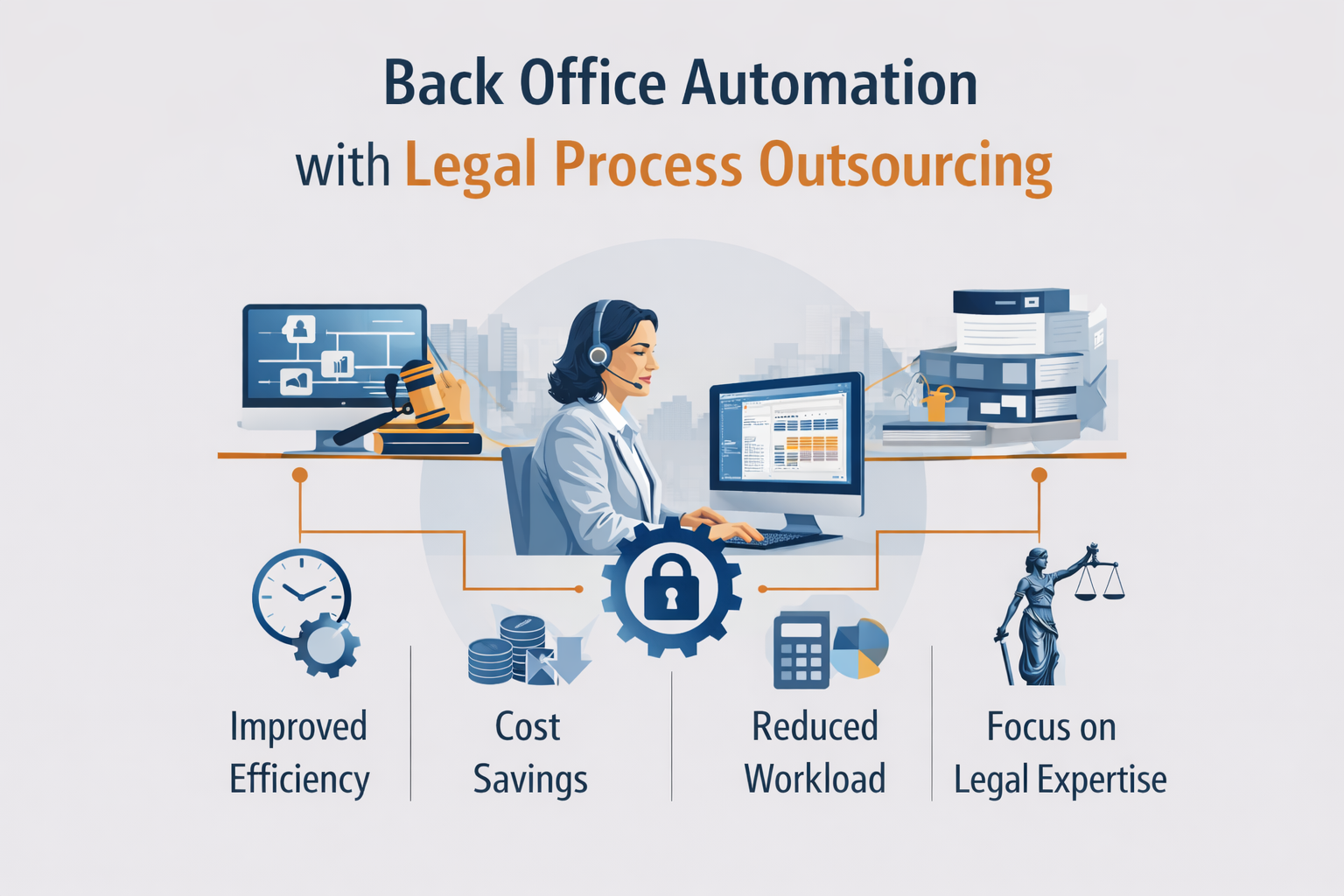
    Back Office Automation with Legal Process Outsourcing: The Competitive Edge Modern Law Firms Can Not Afford to Ignore

    The legal profession is at an inflection point.

    While courtroom advocacy and client counsel remain irreplaceable human skills, the administrative infrastructure supporting legal practice has entered a new era. Document assembly, discovery review, deadline tracking, billing, legal research, case organization these essential back-office functions no longer require the same manual, labour-intensive approach that defined legal operations for decades.

    Today’s most successful law firms aren’t just practicing law differently they’re operating differently. They’ve discovered that combining back-office automation with strategic Legal Process Outsourcing (LPO) creates a force multiplier: streamlined workflows, reduced overhead, faster turnaround, and the freedom to focus on high-value legal work.

    If your firm is still managing back-office tasks the traditional way, you’re not just working harder than necessary you’re competing with one hand tied behind your back.

    The Back Office Burden: Why Traditional Operations Are Holding Firms Back

    Let’s be honest about what “running a law firm” actually involves.

    For every hour spent in court, client meetings, or strategic legal analysis, there are multiple hours consumed by administrative tasks that feel essential but don’t directly generate revenue or strengthen client relationships.

    The typical back-office workload includes:

    • Document management: Drafting contracts, pleadings, motions, discovery requests, and correspondence
    • Legal research: Case law analysis, statutory interpretation, jurisdiction-specific memoranda
    • Discovery support: Document review, privilege screening, exhibit preparation, deposition summaries
    • Docketing and deadline tracking: Court filing deadlines, statute of limitations monitoring, calendar management
    • Billing and time entry: Tracking billable hours, generating invoices, client billing reconciliation
    • Case organization: File management, evidence indexing, trial preparation materials
    • Client communication follow-up: Status updates, document requests, scheduling coordination

    These tasks are necessary. They’re also time-consuming, detail-oriented, and prone to inefficiency when handled manually by high-cost attorney time or overstretched administrative staff.

    The hidden costs compound quickly:

    • Partners and associates spending billable hours on non-billable administrative work
    • Errors and delays caused by manual processes and human oversight
    • Staff burnout from repetitive, high-volume tasks
    • Missed deadlines due to inadequate tracking systems
    • Client dissatisfaction from slow response times or communication gaps
    • Limited scalability growing the practice requires proportional growth in overhead

    The traditional model forces firms to choose between three unsatisfying options: work longer hours, hire more staff (with the associated overhead), or turn away business. None of these are sustainable strategies for long-term success.

    There’s a better way.

    What Back Office Automation Actually Means for Law Firms

    Back-office automation isn’t about replacing lawyers with robots. It’s about leveraging technology and specialized support to handle routine, repetitive, and rules-based tasks more efficiently freeing attorneys to focus on the strategic, analytical, and interpersonal work that truly requires legal expertise.

    Modern back-office automation encompasses:

    Document Automation

    • Template-based contract drafting with variable fields
    • Automated pleading generation using case-specific data
    • Form population for standard legal documents
    • Clause libraries and precedent databases
    • Version control and redlining automation

    Workflow Automation

    • Automated deadline calculation and calendar alerts
    • Task assignment and progress tracking systems
    • Client intake and onboarding workflows
    • Document routing and approval processes
    • Billing and invoicing automation

    Data Management and Analytics

    • Centralized case and matter management systems
    • Client relationship management (CRM) integration
    • Document indexing and intelligent search
    • Time tracking and productivity analytics
    • Financial reporting dashboards

    Communication Automation

    • Client portal access for document sharing and status updates
    • Automated appointment reminders and follow-up emails
    • Template-based client correspondence
    • Secure messaging and collaboration platforms

    While technology provides the infrastructure, the real transformation happens when automation is combined with strategic outsourcing.

    Legal Process Outsourcing: The Human Element in Back Office Transformation

    Automation handles repetitive tasks exceptionally well. But legal work involves nuance, judgment, and context that technology alone can’t replicate.

    This is where Legal Process Outsourcing bridges the gap providing skilled paralegal and legal support professionals who work within your automated systems to handle the substantive work that requires human expertise but doesn’t require attorney-level billing rates.

    Strategic LPO delivers:

    Legal Research and Analysis

    Experienced legal researchers conducting comprehensive case law analysis, statutory interpretation, and jurisdiction-specific memoranda delivered within your practice management system, formatted to your standards, and turned around faster than in-house capacity allows.

    Document Review and Discovery Support

    High-volume document review for litigation, privilege screening, exhibit preparation, and deposition summaries executed by trained legal professionals using your e-discovery platforms and review protocols.

    Contract Lifecycle Management

    Contract drafting, meticulous redlining, comprehensive review, risk assessment, and clause analysis supporting transactional, commercial, and employment documentation with precision.

    Litigation Support

    Assistance with pleadings and motion drafting, case organization, trial preparation, docketing, and deadline management integrated seamlessly with your case management systems.

    Paralegal and Administrative Support

    Legal administrative assistance, billing support, client communication coordination, and document management all executed by professionals trained in legal operations.

    The Power of Integration: Automation + Outsourcing

    Here’s where the magic happens: when you integrate LPO support with back-office automation, you don’t just get incremental improvement you get exponential efficiency gains.

    Consider these real-world scenarios:

    Scenario 1: Personal Injury Intake and Case Management

    Traditional approach: Attorney reviews initial client consultation notes, manually requests medical records, reviews records as they arrive, drafts demand letter, tracks settlement negotiations in email and spreadsheets.

    Automated + LPO approach: Client intake form automatically populates case management system. LPO team requests and organizes medical records, prepares chronology and case summary, drafts demand letter using firm templates. Automated workflow tracks deadlines and settlement communications. Attorney reviews final work product and focuses on negotiation strategy.

    Result: 60% reduction in attorney time per case. Faster client response. Consistent quality across all cases.

    Scenario 2: Immigration Petition Preparation

    Traditional approach: Attorney meets with client, manually gathers documentation, drafts petition forms, reviews supporting evidence, prepares cover letter and filing package.

    Automated + LPO approach: Client portal collects required documentation automatically. LPO team experienced in immigration matters drafts H-1B, L-1, PERM, or adjustment of status petitions using automated form population. Document checklist ensures completeness. Attorney reviews and approves final petition.

    Result: Triple the petition volume capacity without adding attorney headcount. Reduced errors and RFEs. Predictable turnaround times.

    Scenario 3: Commercial Litigation Discovery

    Traditional approach: Associates manually review thousands of documents, create privilege logs, prepare exhibit lists, summarize depositions billable hours skyrocket while margins shrink.

    Automated + LPO approach: Automated e-discovery tools handle initial document processing and keyword filtering. LPO legal professionals conduct substantive document review using your review platform. Automated reporting tracks progress. Associates focus on case strategy and key document analysis.

    Result: 70% cost reduction in discovery phase. Faster completion. Partners maintain control while leveraging cost-effective support.

    The Tangible Benefits: What Firms Actually Gain

    When law firms successfully integrate back-office automation with strategic LPO, the transformation touches every aspect of operations.

    1. Dramatic Cost Reduction

    Why pay attorney rates ($200-$500/hour) or hire full-time staff with benefits for work that can be handled by specialized LPO professionals at a fraction of the cost? Firms typically see 40-60% reduction in back-office operational costs.

    2. Scalability Without Proportional Overhead

    Handle 2x or 3x the caseload without doubling your staff. Automated workflows and flexible LPO engagement models allow you to scale up during busy periods and scale down during slower times impossible with traditional employment models.

    3. Faster Turnaround and Response Times

    With 24/7 global delivery models, work continues around the clock. Projects that took days now take hours. Client requests receive same-day responses instead of “I’ll get back to you next week.”

    4. Improved Accuracy and Consistency

    Automated workflows reduce human error. Standardized templates ensure consistency. Quality control protocols catch mistakes before they reach clients or courts.

    5. Enhanced Client Experience

    Faster response times, transparent communication through client portals, predictable timelines, and professional-quality work product all at competitive pricing. Happy clients become referral sources.

    6. Better Attorney Satisfaction and Retention

    When associates spend time on meaningful legal work instead of tedious document assembly and deadline tracking, job satisfaction improves. Burnout decreases. Talented lawyers stay longer.

    7. Competitive Positioning

    Firms that operate efficiently can offer better pricing, faster service, and higher quality than competitors stuck in traditional models. You become the firm clients want to hire.

    8. Data-Driven Decision Making

    Automated systems generate analytics on case profitability, attorney productivity, turnaround times, and client satisfaction. Make strategic decisions based on data instead of gut feeling.

    Addressing the Hesitation: Common Concerns About Automation and Outsourcing

    Despite the clear benefits, many firms hesitate to embrace back-office automation and LPO. Let’s address the most common concerns directly.

    “We’ll lose control over quality and client work”

    Reality: You maintain complete oversight. LPO teams work within your systems, follow your protocols, and deliver work for your review and approval. Automation ensures consistent quality through standardized processes. You control what gets automated and what gets outsourced.

    “Our clients won’t accept outsourced work”

    Reality: Clients care about results, responsiveness, and value not whether document review happened in your office or through an LPO partner. Most clients never know (or care) about your back-office operations, as long as deliverables meet their expectations. Many sophisticated clients actively encourage efficiency measures that reduce their legal costs.

    “Confidentiality and data security are too risky”

    Reality: Reputable LPO providers use bank-level encryption, secure cloud platforms, and strict confidentiality protocols compliant with legal ethics rules, HIPAA, GDPR, and U.S. privacy regulations. Often, outsourced systems are more secure than locally managed servers or paper files. Look for providers with demonstrable security credentials and attorney-client privilege protections.

    “Our practice is too specialized or unique”

    Reality: The best LPO providers specialize in legal work and train teams in specific practice areas—personal injury, immigration, family law, intellectual property, real estate, commercial litigation, bankruptcy, corporate transactions, and more. They adapt to your processes and standards, not vice versa.

    “Technology is too complicated or expensive to implement”

    Reality: Most modern legal tech operates on user-friendly cloud platforms requiring minimal IT infrastructure. Many tools integrate seamlessly with systems you’re already using (Clio, MyCase, Relativity, QuickBooks). Implementation support is typically included. ROI is measured in weeks or months, not years.

    “We’re not big enough to benefit from automation and outsourcing”

    Reality: Solo practitioners and small firms often benefit most because they have the least capacity for administrative overhead. Even part-time LPO support (20 hours/week) or project-based engagements can transform operations for smaller practices. You don’t need enterprise-scale volume to see meaningful results.

    Getting Started: A Practical Roadmap

    Transforming your back-office operations doesn’t require a massive, all-at-once overhaul. The most successful implementations follow a phased approach.

    Phase 1: Assessment (Week 1-2)

    • Identify your highest-volume, most time-consuming back-office tasks
    • Map current workflows and pain points
    • Determine which tasks are best suited for automation vs. outsourcing
    • Set clear goals (cost reduction, faster turnaround, increased capacity, etc.)

    Phase 2: Pilot Program (Month 1-2)

    • Select one practice area or task type for initial implementation
    • Choose an LPO partner with relevant experience and flexible engagement models
    • Implement basic automation tools (if not already in place)
    • Start with a small project or part-time support arrangement
    • Monitor results closely and gather feedback

    Phase 3: Optimization (Month 3-4)

    • Refine workflows based on pilot results
    • Expand successful processes to additional practice areas
    • Integrate automation tools more deeply
    • Increase LPO support as ROI is demonstrated
    • Train team on new processes and systems

    Phase 4: Scale (Month 5+)

    • Expand automation and outsourcing to all suitable back-office functions
    • Move from project-based to dedicated ongoing support as needed
    • Leverage analytics to continuously improve efficiency
    • Realize full cost savings and capacity gains

    What to Look for in an LPO Partner

    Not all LPO providers are created equal. When evaluating potential partners, prioritize these critical factors:

    Legal-Specific Expertise

    Do they understand legal practice, not just general business processes? Look for teams with paralegal certifications, legal training, and experience in your specific practice areas.

    Technology Integration

    Can they work seamlessly with your existing practice management software, document automation tools, and e-discovery platforms? Native compatibility saves time and reduces friction.

    Security and Compliance

    What protocols protect attorney-client privilege and confidential information? Verify encryption standards, access controls, background checks, and compliance certifications.

    Flexibility and Scalability

    Can they adjust to your changing needs ramping up during busy periods, providing specialized support for particular case types, offering multiple engagement models (full-time, part-time, project-based)?

    Communication and Responsiveness

    Will you have a dedicated point of contact? How quickly do they respond to questions or concerns? Time-zone coverage matters for turnaround speed.

    Quality Control Processes

    What review procedures ensure accuracy and consistency? How do they handle errors or revisions? Look for documented quality assurance protocols.

    Transparent Pricing

    Are costs clear and predictable? Hidden fees and variable pricing create budget uncertainty. The best providers offer straightforward pricing models.

    Cultural Fit

    Do they understand your firm’s values, communication style, and client service standards? The best LPO relationships feel like true partnerships, not vendor transactions.

    Real-World Success: What Transformation Looks Like

    Consider the trajectory of a mid-sized personal injury firm that implemented integrated automation and LPO:

    Before transformation:

    • 8 attorneys handling 120 active cases
    • Partners spending 30% of time on administrative tasks
    • Average case resolution time: 14 months
    • Frequent missed deadlines and client communication delays
    • Limited capacity to take new cases without hiring additional attorneys

    After implementing automation + LPO:

    • Same 8 attorneys now handling 220 active cases
    • Partners spending 90% of time on legal strategy and client relationships
    • Average case resolution time: 9 months
    • Zero missed deadlines; automated tracking and LPO deadline management
    • Client satisfaction scores increased 35%
    • Revenue increased 45% with minimal overhead growth

    How they did it:

    • Implemented case management automation for intake, document requests, and client communication
    • Partnered with LPO team for medical records review, demand letter drafting, and settlement documentation
    • Automated billing and time tracking integration
    • Used LPO paralegal support for discovery organization and trial preparation

    The transformation didn’t happen overnight it took about 6 months to fully implement. But once operational, the firm never looked back.

    The Competitive Reality: Adapt or Fall Behind

    Here’s the uncomfortable truth: your competitors are already doing this.

    Forward-thinking firms have discovered that back-office automation and strategic LPO aren’t just nice-to-have efficiency improvements they’re fundamental competitive advantages. They can offer better pricing, faster service, and higher quality than firms stuck in traditional operational models.

    Meanwhile, client expectations continue to evolve. Today’s legal consumers expect:

    • Transparency: Real-time case updates, clear communication, predictable timelines
    • Responsiveness: Same-day responses, not “I’ll get back to you next week”
    • Value: Competitive pricing without sacrificing quality
    • Professionalism: Consistent, high-quality work product across all matters

    Delivering on these expectations with traditional back-office models becomes increasingly difficult and expensive.

    The Bottom Line: Work Smarter, Not Just Harder

    Back-office automation combined with Legal Process Outsourcing isn’t about cutting corners or compromising quality. It’s about building a modern, efficient, client-focused law firm that leverages technology and specialized expertise to deliver exceptional results.

    When routine tasks are automated and substantive support work is handled by trained legal professionals at appropriate cost points, everything changes:

    • Attorneys focus on high-value legal work that actually requires their expertise
    • Cases move faster through streamlined, consistent workflows
    • Clients receive responsive, professional service at competitive rates
    • Firms scale capacity without proportional overhead increases
    • Profitability improves while stress and burnout decrease

    The legal profession is evolving. The question isn’t whether your firm will eventually adopt these approaches the question is whether you’ll lead the change or scramble to catch up when traditional models become unsustainable.

    Your choice is clear: continue managing back-office operations the same way you did ten years ago, or embrace the tools and partnerships that transform legal practice into a more efficient, profitable, and sustainable business.

    The firms winning today aren’t working harder they’re working smarter.

    Ready to explore how back-office automation and LPO can transform your practice? Connect with FourFold LPO to discuss your specific operational challenges and discover customized solutions that fit your firm perfectly.

  • How Litigation Support Services Improve Case Outcomes

    How Litigation Support Services Improve Case Outcomes

    Introduction: The Critical Role of Litigation Support in Modern Legal Practice

    In today’s complex legal landscape, successful litigation requires far more than courtroom advocacy skills and substantive legal knowledge. Behind every compelling oral argument stands hundreds of hours of meticulous preparation: legal research, document review, brief drafting, motion preparation, discovery management, and case strategy development. The quality of this foundational work often determines case outcomes more than any other single factor.

    Yet law firms face mounting pressure to deliver exceptional litigation results while managing costs, handling increased caseloads, and responding to client demands for efficiency and value. Senior litigators find themselves stretched thin between court appearances, client meetings, business development, and the extensive preparation work that underpins successful litigation. Associates face overwhelming workloads that can compromise quality and lead to burnout. And clients increasingly scrutinize legal bills, questioning the value of every billable hour.

    This is where FourFold LPO’s litigation support services create transformative value. As a specialized legal process outsourcing organization serving U.S. law firms, we provide comprehensive litigation support that enables attorneys to focus on strategic advocacy while ensuring that every case rests on a foundation of thorough research, expertly drafted documents, and meticulous preparation. Our services span the entire litigation lifecycle—from pre-litigation investigation and demand letters through trial preparation, post-trial motions, and appeals.

    1. Comprehensive Litigation Support: The FourFold LPO Service Portfolio

    Pre-Litigation Services: Building Strong Foundations

    Successful litigation often begins long before the first complaint is filed. The pre-litigation phase involves critical activities that shape case strategy, determine settlement leverage, and establish the factual and legal foundation for potential court proceedings. FourFold LPO supports law firms during this crucial stage through comprehensive pre-litigation services.

    Our pre-litigation support includes conducting thorough factual investigations to identify key witnesses, locate relevant documents, and develop detailed chronologies of events; performing comprehensive legal research to assess the viability of potential claims and defenses under applicable law; drafting demand letters that clearly articulate client positions, present compelling legal and factual arguments, and maximize settlement leverage; preparing pre-suit discovery through informal information gathering and document requests; developing case memoranda that analyze legal issues, assess strengths and weaknesses, and recommend litigation strategies; and conducting preliminary damage calculations to quantify potential recovery or exposure.

    This pre-litigation work is often dispositive. A well-researched demand letter backed by thorough factual investigation can result in favorable settlement before litigation costs mount. Conversely, inadequate pre-suit preparation can lead to weak complaints that invite dispositive motions or result in unfavorable settlements from positions of weakness.

    Pleadings and Motion Practice: Precision in Advocacy

    Pleadings and motions are the written advocacy that frames litigation and often determines outcomes before trial. Every complaint, answer, motion to dismiss, summary judgment motion, and discovery motion requires careful research, precise drafting, and strategic judgment. The quality of these documents directly impacts case trajectory and results.

    FourFold LPO provides comprehensive support for all phases of motion practice. We draft complaints that clearly state viable claims, plead facts with appropriate specificity, anticipate defenses, and establish favorable procedural posture. We prepare answers and affirmative defenses that protect client interests, preserve all available defenses, and position cases favorably for subsequent motions. We draft motions to dismiss that identify fatal pleading deficiencies, present persuasive legal arguments, and comply with procedural requirements. We prepare summary judgment motions that marshal evidence effectively, present clear legal arguments, and address anticipated opposition. And we draft discovery motions including motions to compel, protective orders, and sanctions motions that enforce discovery rights while managing costs.

    Our motion drafting follows proven frameworks that maximize persuasiveness. We lead with strongest arguments, use clear headings that preview conclusions, cite controlling authority prominently, address adverse precedent directly and candidly, and present facts in narrative form that supports legal conclusions. Every motion undergoes rigorous quality review to ensure logical coherence, factual accuracy, and compliance with local rules.

    Trial Brief Preparation: Persuasive Written Advocacy

    Trial briefs represent the culmination of case preparation, synthesizing months or years of work into comprehensive written advocacy that educates the court, frames disputed issues, and presents the legal and factual basis for favorable rulings. Superior trial briefs can shift case momentum, influence evidentiary rulings, and establish the analytical framework that guides jury instructions and judicial decision-making.

    FourFold LPO’s trial brief services encompass every aspect of trial preparation documentation. We prepare comprehensive trial briefs that present case theory, summarize evidence, analyze legal issues, and argue for favorable rulings on contested matters. We draft motions in limine that exclude prejudicial or inadmissible evidence before it reaches the jury, protecting client interests and streamlining trial presentation. We prepare proposed jury instructions that clearly state applicable law, favor client positions on contested instructions, and comply with jurisdictional requirements. We draft voir dire questions and jury selection strategies that identify favorable and unfavorable jurors. And we prepare witness examination outlines, exhibit lists, and trial notebooks that organize case materials for efficient courtroom use.

    Our trial brief preparation leverages deep experience across diverse practice areas and jurisdictions. We understand judicial preferences, local practice conventions, and strategic considerations that influence brief effectiveness. We work collaboratively with trial counsel to ensure written advocacy complements and reinforces oral advocacy.

    Post-Trial and Appellate Services: Protecting Victories and Pursuing Justice

    Litigation does not end with trial verdicts. Post-trial motions, enforcement proceedings, and appeals require continued advocacy to protect favorable outcomes or correct adverse results. FourFold LPO supports law firms through these critical post-trial phases.

    Our post-trial services include drafting motions for judgment notwithstanding verdict (JNOV) that challenge jury verdicts unsupported by evidence; preparing motions for new trial based on evidentiary errors, misconduct, or excessive damages; drafting post-judgment motions for attorney’s fees, costs, and enforcement; preparing satisfaction of judgment documents and settlement agreements; and supporting collection efforts through supplementary proceedings and asset discovery.

    For appellate matters, we provide comprehensive support including preparing notices of appeal and procedural documents complying with strict appellate deadlines and requirements; drafting appellate briefs that identify reversible errors, present compelling legal arguments, and marshal record evidence effectively; preparing appendices and record excerpts that organize trial court materials for appellate review; conducting appellate legal research addressing standards of review, preservation requirements, and controlling precedent; and drafting reply briefs that respond to opposing arguments and reinforce core positions.

    Appellate practice requires specialized skills distinct from trial advocacy. Our appellate team includes former appellate clerks and attorneys with extensive appellate experience who understand how to frame issues for appellate review, identify and preserve reversible errors, and craft persuasive written arguments that resonate with appellate judges.

    2. Discovery Management: Controlling Costs While Maximizing Results

    Document Review and Production: Efficiency Through Expertise

    Discovery is often the most expensive phase of litigation, with document review costs alone consuming substantial portions of litigation budgets. Modern cases frequently involve hundreds of thousands or millions of electronic documents requiring review for relevance, privilege, and responsiveness. Managing this volume efficiently while maintaining quality is a critical challenge that significantly impacts case economics.

    FourFold LPO provides scalable document review services that dramatically reduce discovery costs while ensuring thorough, accurate work product. Our document review services include developing review protocols and coding guidelines tailored to case-specific issues; conducting first-level review to identify responsive, privileged, and confidential documents; performing quality control review to ensure consistency and accuracy; preparing privilege logs that adequately describe withheld documents while protecting confidentiality; organizing document productions with appropriate metadata and logical organization; and managing document databases using industry-standard platforms including Relativity, Concordance, and others.

    Our document review teams include attorneys and legal professionals with subject matter expertise relevant to case issues, ensuring that reviewers understand the factual and legal context necessary for accurate coding decisions. We utilize technology-assisted review (TAR) and predictive coding where appropriate to increase efficiency, and we maintain rigorous quality control processes including statistical sampling and re-review protocols.

    The cost savings from outsourced document review are substantial. Where traditional law firm review might cost $200-400 per hour, our efficient review model typically delivers comparable or superior results at 50-70% cost reduction. For large document productions, this can represent hundreds of thousands or millions of dollars in savings.

    Interrogatories and Discovery Responses: Thorough and Strategic

    Written discovery including interrogatories, requests for production, and requests for admission requires careful attention to detail and strategic judgment. Responses must be complete and accurate to satisfy discovery obligations, yet carefully worded to avoid unnecessary admissions or disclosures that could harm client positions.

    FourFold LPO assists law firms in preparing comprehensive discovery responses through conducting factual investigations to gather information responsive to interrogatories; drafting detailed, accurate responses that satisfy discovery obligations while protecting client interests; preparing objections based on privilege, proportionality, undue burden, and other grounds; coordinating with clients to gather responsive information and verify accuracy; and preparing responses to requests for admission that avoid unnecessary concessions while acknowledging undisputed facts.

    Our discovery response preparation follows established protocols for consistency and quality. We collaborate closely with trial counsel to ensure discovery responses align with case strategy and do not inadvertently undermine legal positions or create impeachment opportunities.

    Deposition Preparation: Setting the Foundation for Success

    Depositions are critical discovery events that can make or break cases. Effective deposition preparation requires thorough document review, legal research, and strategic planning to identify productive lines of questioning and anticipate witness testimony.

    FourFold LPO supports deposition preparation through reviewing relevant documents and creating chronologies and document summaries that organize key information; identifying inconsistencies, gaps, and impeachment opportunities in witness statements and prior testimony; preparing deposition outlines with strategic questioning sequences; conducting legal research regarding evidentiary objections and questioning limitations; preparing deposition notices, subpoenas, and document requests; and creating witness preparation materials for client depositions including anticipated questions and strategic considerations.

    This thorough preparation enables attorneys to conduct more effective depositions that develop favorable evidence, preserve testimony for trial, and identify weaknesses in opposing positions. Well-prepared depositions also tend to be more efficient, reducing the time and expense of protracted examination.

    3. Legal Research: Deep Analysis Supporting Strong Advocacy

    Comprehensive Issue Analysis

    Effective legal advocacy rests on thorough research and analysis. Every motion, brief, and legal argument requires identification of controlling law, analysis of how precedent applies to case facts, and strategic assessment of legal strengths and vulnerabilities. The quality and depth of legal research often separates winning arguments from losing ones.

    FourFold LPO’s legal research services provide law firms with comprehensive analysis across all litigation issues. Our research attorneys conduct thorough research using primary and secondary sources including case law, statutes, regulations, treatises, and practice guides. We prepare detailed research memoranda that summarize applicable law, analyze how precedent applies to case-specific facts, address counterarguments and adverse authority, and recommend strategic approaches based on legal analysis.

    Our research methodology emphasizes both breadth and depth. We identify all potentially relevant authority through comprehensive database searches, then analyze the most significant cases and statutes in detail. We distinguish unfavorable authority and identify bases for limiting or distinguishing adverse precedent. We track subsequent history to ensure cited cases remain good law. And we provide complete citation information in proper Bluebook or jurisdiction-specific format.

    Jurisdiction-Specific Expertise

    Legal research requirements vary significantly across jurisdictions. Federal and state courts apply different substantive law, procedural rules, evidentiary standards, and local practices. Effective research requires understanding these jurisdictional distinctions and identifying the most persuasive authority for the specific forum where cases will be decided.

    FourFold LPO maintains research capabilities across all federal circuits and state jurisdictions. Our research teams include attorneys admitted in multiple jurisdictions who understand local law and practice. We track circuit splits and jurisdictional variations that may affect case outcomes. We identify persuasive authority from other jurisdictions that can influence courts where controlling precedent is sparse or unfavorable. And we stay current with recent developments through continuous monitoring of new decisions, legislative changes, and regulatory updates.

    Specialized Subject Matter Research

    Modern litigation increasingly involves complex subject matter requiring specialized knowledge beyond general legal practice. Cases may turn on technical issues in areas such as intellectual property, securities regulation, antitrust, employment law, environmental regulation, healthcare, or technology. Effective advocacy in these areas requires not just general legal research skills but substantive expertise in specialized legal domains.

    FourFold LPO’s research team includes attorneys with substantive expertise across diverse practice areas. We assign research projects to attorneys with relevant subject matter knowledge who can identify specialized sources, understand technical legal concepts, and provide sophisticated analysis. This specialized expertise ensures that research deliverables address the nuanced legal issues that often determine complex case outcomes.

    4. Case Management and Organization: Mastering Complexity

    Chronology and Timeline Development

    Complex litigation often involves events spanning months or years, numerous actors, multiple locations, and voluminous documentation. Understanding case chronology and organizing information coherently is essential for effective advocacy, yet developing comprehensive chronologies is time-intensive work that can consume hundreds of attorney hours.

    FourFold LPO prepares detailed chronologies that organize case information and facilitate strategic analysis. Our chronology services include reviewing case documents, depositions, and discovery materials to identify key events; creating detailed timelines with precise dates, actors, and document citations; organizing events by issue, claim, or party to facilitate analysis; identifying factual disputes, inconsistencies, and gaps requiring further investigation; and preparing both comprehensive master chronologies and issue-specific timelines tailored to particular motions or trial themes.

    Well-organized chronologies serve multiple purposes throughout litigation. They help attorneys quickly understand case facts and identify key events. They facilitate deposition preparation by organizing information about specific time periods or issues. They support motion practice by marshaling facts supporting legal arguments. And they assist trial preparation by organizing evidence into coherent narratives.

    Fact Compilation and Organization

    Beyond chronologies, effective case management requires systematic organization of factual information including witness statements, document contents, physical evidence, expert opinions, and other case materials. This information must be organized in ways that facilitate retrieval and analysis throughout litigation.

    FourFold LPO provides comprehensive fact organization services including creating witness summaries that organize testimony by topic and issue; preparing document summaries and abstracts for key case materials; developing issue-specific fact compilations that marshal all evidence relating to particular claims or defenses; creating exhibit lists and databases that track physical evidence; and maintaining case databases with searchable fields that enable rapid information retrieval.

    This systematic organization transforms unmanageable volumes of information into accessible resources that support efficient case development and persuasive advocacy.

    Trial Preparation and Organization

    As trial approaches, case organization becomes increasingly critical. Trial attorneys need efficient access to exhibits, witness materials, legal authority, and strategic information. Trial preparation requires creating comprehensive trial notebooks, exhibit books, and organizational systems that support smooth courtroom presentation.

    FourFold LPO assists with comprehensive trial preparation including organizing trial exhibits with appropriate markings and authentication; preparing trial notebooks containing jury instructions, motions in limine, legal research, witness outlines, and exhibit lists; creating witness binders with relevant documents for examination; developing examination outlines for direct and cross-examination; preparing demonstrative exhibits and trial graphics; and creating trial technology support plans for electronic presentation systems.

    This meticulous preparation enables trial teams to focus on advocacy rather than logistics, ensuring smooth trial presentation and professional client service.

    5. The Strategic Advantage: How Litigation Support Improves Outcomes

    Enhanced Quality Through Specialization

    One of the most significant ways litigation support services improve case outcomes is through enhanced quality resulting from specialization and focused expertise. FourFold LPO’s litigation support professionals perform the same types of work repeatedly across numerous matters, developing refined skills, efficient processes, and deep knowledge that generalist practitioners may lack.

    A legal researcher who conducts motion to dismiss research across dozens of cases each year develops expertise in pleading standards, failure to state a claim arguments, and jurisdictional nuances that an associate handling occasional research projects cannot match. A document reviewer who codes privilege issues daily becomes expert at identifying subtle privilege questions that less experienced reviewers might miss. A brief writer who drafts summary judgment motions continuously refines persuasive techniques and learns what arguments resonate with courts.

    This specialization translates directly to better outcomes. More thorough research identifies winning arguments that might otherwise be missed. More accurate document review protects privilege while avoiding costly over-designation. Better drafted motions and briefs persuade courts more effectively. The cumulative impact of these quality improvements across all phases of litigation can be dispositive in close cases.

    Strategic Focus for Trial Attorneys

    Perhaps the most important way litigation support improves outcomes is indirect: by freeing trial attorneys from routine preparation tasks, outsourcing enables lawyers to focus time and mental energy on strategic advocacy that requires senior judgment and cannot be delegated.

    When partners and senior associates are not consumed by document review, research, and drafting tasks that specialized providers can handle efficiently, they can instead focus on developing case strategy and theory; conducting critical witness examinations and depositions; preparing and delivering oral arguments; managing client relationships and expectations; negotiating favorable settlements; and making strategic decisions that determine case trajectory.

    This reallocation of attorney time toward high-value activities improves case outcomes while simultaneously enhancing attorney satisfaction and client service. Lawyers do more of the work they were trained for and find most engaging, while clients benefit from having senior talent focused on strategic matters rather than routine tasks.

    Cost Efficiency Enabling Aggressive Advocacy

    Litigation outcomes are often influenced by parties’ willingness and ability to pursue aggressive discovery, file dispositive motions, conduct thorough factual investigation, and maintain sustained advocacy throughout extended proceedings. However, the high cost of traditional litigation staffing can create pressure to limit these activities, potentially compromising case development.

    By reducing litigation costs substantially while maintaining quality, FourFold LPO’s litigation support services enable more aggressive and thorough case development within reasonable budgets. Clients can afford comprehensive discovery, thorough motion practice, and extensive trial preparation that might otherwise be cost-prohibitive. This more complete case development often leads to better outcomes through stronger factual records, more persuasive legal arguments, and superior trial preparation.

    Additionally, cost efficiency improves settlement leverage. When litigation costs are manageable, clients can credibly threaten to pursue cases through trial rather than accepting unfavorable settlements under pressure from mounting expenses. Conversely, opponents facing well-funded adversaries with efficient cost structures may be more willing to settle reasonably rather than engage in expensive litigation wars of attrition.

    Consistency and Reliability

    Successful litigation requires not just occasional excellence but consistent performance across all case components over extended time periods. A single missed deadline, inadequate research, or poorly drafted brief can undermine months of otherwise excellent work. Reliability and consistency matter enormously.

    FourFold LPO’s litigation support services provide exceptional consistency through systematic processes, comprehensive checklists, multi-level quality review, and professional management. Unlike law firms where associate availability and attention can fluctuate based on competing demands, our dedicated litigation support teams maintain consistent focus and quality regardless of other pressures.

    This reliability extends to deadline management, quality standards, and responsive communication. Law firms can depend on deliverables arriving on schedule, meeting quality expectations, and conforming to specifications. This consistency eliminates a significant source of risk and enables more confident case planning.

    6. Implementation and Integration: Building Successful Partnerships

    Seamless Workflow Integration

    Effective litigation support requires seamless integration between law firm attorneys and FourFold LPO teams. We work collaboratively to establish clear communication protocols, define deliverable specifications, manage deadlines and priorities, and ensure quality standards align with law firm and client expectations.

    Our integration process includes establishing dedicated team assignments with consistent personnel for ongoing matters; implementing secure communication channels and document sharing protocols; creating matter-specific style guides and quality standards; scheduling regular status meetings and progress updates; and developing escalation procedures for urgent requests or quality concerns.

    We adapt to law firm preferences regarding technology platforms, communication methods, work product formats, and review processes. Our goal is to function as a seamless extension of the law firm litigation team, not an external vendor requiring special accommodation.

    Quality Assurance and Attorney Oversight

    Law firms retain ultimate responsibility for all legal work, including work performed by FourFold LPO. Our service model is designed to support attorney oversight while minimizing review burden through robust internal quality control.

    All FourFold LPO deliverables undergo multi-level internal review before submission to law firms. Complex research memoranda and drafted motions are reviewed by senior attorneys with relevant expertise. Document review projects include statistical quality control sampling and re-review. Briefs and other advocacy documents are reviewed for logical coherence, citation accuracy, and persuasive effectiveness.

    This thorough internal quality control means that work product reaching law firm attorneys has already been vetted and refined, allowing more efficient review focused on strategic considerations rather than basic quality issues. Law firms can review work product for consistency with case strategy and client preferences, then present it to clients or courts with confidence.

    Flexible Engagement Models

    Different matters require different support models. FourFold LPO offers flexible engagement structures including project-based arrangements for discrete tasks like specific motions or appeals; dedicated team assignments for complex litigation requiring ongoing support; hourly staffing for variable-scope work; and fixed-fee arrangements for defined deliverables with predictable scope.

    We work with law firms to structure engagements that align with case economics, client budgets, and predictability preferences. Our goal is to provide maximum flexibility while maintaining consistent quality and responsive service.

    Conclusion: Litigation Support as Competitive Advantage

    In an increasingly competitive legal market where clients demand exceptional results at reasonable costs, litigation support services have evolved from optional cost-saving measures to strategic imperatives that fundamentally enhance case outcomes while improving law firm economics.

    FourFold LPO’s comprehensive litigation support services enable law firms to deliver superior results through enhanced quality from specialized expertise, strategic focus for trial attorneys on high-value advocacy, cost efficiency that enables aggressive case development, consistency and reliability across all case phases, and advanced technology capabilities without prohibitive investment.

    The case outcomes speak for themselves. Law firms leveraging strategic litigation support partnerships consistently achieve better results through more thorough preparation, stronger advocacy, superior case development, and well-resourced litigation strategies that opponents struggle to match.

    As litigation complexity continues to increase and client expectations continue to rise, the competitive advantage from effective litigation support will only grow. Law firms that proactively build sophisticated litigation support partnerships will be best positioned to win cases, satisfy clients, and build sustainable, profitable litigation practices.

    FourFold LPO stands ready to serve as your litigation support partner, bringing specialized expertise, operational excellence, advanced technology, and unwavering commitment to quality that helps you win cases and build your practice. From pre-litigation investigation through trial and appeal, we provide comprehensive support that improves outcomes while enhancing profitability.

    The future of litigation belongs to law firms that combine excellent advocacy with efficient, technology-enabled preparation and support. We invite you to explore how FourFold LPO’s litigation support services can become a strategic advantage for your practice, improving case outcomes while building a more profitable and sustainable litigation practice.

    About FourFold LPO

    FourFold LPO is a premier legal process outsourcing organization providing comprehensive litigation support services to U.S. law firms. Our team includes experienced litigators, appellate specialists, research attorneys, and litigation support professionals who deliver exceptional work product across all phases of litigation. From pre-litigation demand letters through trial briefs and appellate advocacy, we help law firms achieve superior case outcomes while managing costs and improving profitability.

    To learn more about how FourFold LPO’s litigation support services can improve your case outcomes and strengthen your litigation practice, contact us today to discuss your specific needs and explore pilot engagement opportunities.

  • How Legal Research Outsourcing Improves Cost Efficiency

    How Legal Research Outsourcing Improves Cost Efficiency

    Legal research is the foundation of sound legal strategy, but it’s also one of the most time-intensive and costly aspects of legal practice. Associates and paralegals spend countless hours analyzing case law, interpreting statutes, and preparing memoranda, while clients increasingly push back against high hourly billing rates for research-intensive work.

    In this environment, legal research outsourcing has emerged as a strategic solution that allows law firms to maintain research quality while dramatically improving cost efficiency. Here’s how outsourcing legal research delivers measurable financial benefits without compromising the analytical rigor your practice demands.

    The True Cost of In-House Legal Research

    Before examining the benefits of outsourcing, it’s important to understand the full cost structure of in-house legal research:

    Direct Labor Costs: Attorney and paralegal time billed at premium hourly rates, often $150 to $500+ per hour depending on experience level and market.

    Opportunity Costs: Every hour spent on research is an hour not spent on client development, courtroom advocacy, negotiations, or other high-value activities that drive firm growth.

    Overhead and Infrastructure: Legal research platforms (Westlaw, LexisNexis), office space, benefits, training, and technology infrastructure add 40-60% to base compensation costs.

    Inefficiency Costs: Junior attorneys learning on the job, duplicated research efforts, and time spent on jurisdictional matters outside the firm’s core expertise all inflate research costs.

    Variable Demand: Staffing for peak research needs means paying for idle capacity during slower periods, while understaffing creates bottlenecks and delays.

    When these factors are totaled, the true cost of legal research often exceeds what firms realize, or what clients are willing to pay.

    How Outsourcing Reduces Legal Research Costs

    Legal research outsourcing transforms a high-cost, variable expense into a predictable, scalable, and significantly more affordable function. Here’s how:

    1. Lower Effective Hourly Rates

    Outsourced legal research providers employ experienced legal professionals, often attorneys and paralegals with specialized training at rates substantially below traditional in-house costs. Firms typically see 40-60% cost savings compared to having associates or senior paralegals conduct the same research internally.

    This differential allows firms to maintain profitability on research-intensive matters while offering more competitive pricing to clients, expanding your ability to take on cases that might otherwise be financially marginal.

    2. Elimination of Overhead

    When you outsource legal research, you eliminate the overhead burden associated with in-house employees. There are no benefits packages, no office space requirements, no recruitment and training costs, and no ongoing technology subscriptions for additional research platforms.

    You pay only for productive research time, not for downtime, administrative tasks, or the fixed costs of maintaining full-time staff.

    3. Scalability Without Staffing Risk

    Legal research demand fluctuates based on case load, practice area, and litigation phases. Outsourcing provides immediate scalability ramp up research support during discovery, trial preparation, or appellate work, then scale back during slower periods.

    This flexibility eliminates the painful choice between understaffing (which creates delays and quality issues) and overstaffing (which wastes resources during slow periods). You access exactly the research capacity you need, when you need, without long-term staffing commitments.

    4. Specialized Expertise on Demand

    Different cases require different areas of legal expertise. Rather than training generalist staff or hiring specialists for occasional needs, outsourcing gives you access to research professionals with specific experience in personal injury, family law, immigration, intellectual property, criminal defense, commercial litigation, or any other practice area.

    This specialization improves both research quality and efficiency—experienced researchers complete projects faster and with greater accuracy, reducing revision cycles and research dead-ends that waste time and money.

    5. Time Zone Advantages and Faster Turnaround

    Global delivery models enable 24/7 research operations. Submit a research request at the end of your business day and receive comprehensive analysis by the following morning. This accelerated turnaround improves case preparation timelines and allows your attorneys to focus on strategic work rather than spending days buried in case law.

    Faster research completion also means faster matter resolution, improved client satisfaction, and better cash flow as cases move through your practice more efficiently.

    6. Reduced Billing Write-Offs

    One of the hidden costs of in-house research is billing realization, the gap between time worked and time clients will actually pay for. Junior associates may spend 10 hours researching an issue that clients believe should take 3 hours, forcing firms to write off the difference.

    Outsourced research eliminates this problem. You purchase research at a known cost, markup appropriately for your market, and present clients with reasonable billing that reflects efficient work product, improving both client relationships and firm profitability.

    7. Predictable Cost Structure

    Outsourcing converts variable, unpredictable research expenses into manageable, budgetable costs. Whether you engage on a project basis, through blocks of hours, or with dedicated part-time or full-time research support, you gain cost predictability that simplifies financial planning and matter budgeting.

    This predictability is especially valuable for fixed-fee arrangements, where research cost overruns can destroy profitability. With outsourcing, you can accurately estimate research costs and price services accordingly.

    Cost Efficiency Across Different Engagement Models

    Legal research outsourcing accommodates various engagement structures, each offering distinct cost benefits:

    Project-Based Research: Pay a fixed fee for defined deliverables ideal for one-off memoranda, case law reviews, or specific legal questions. Eliminates uncertainty and provides clear budget control.

    Block of Hours: Pre-purchase hour packages at discounted rates and deploy them as needed. Perfect for firms with regular but variable research needs, providing cost savings while maintaining flexibility.

    Part-Time Dedicated Support: Secure consistent research support for a set number of hours weekly at reduced rates compared to full-time in-house staff. Ideal for firms with steady research volume that doesn’t justify full-time hiring.

    Full-Time Dedicated Resources: For high-volume practices, dedicated research professionals working exclusively for your firm deliver maximum cost savings while ensuring deep familiarity with your cases, preferences, and standards.

    Beyond Cost Savings: The Strategic Value of Outsourcing

    While cost efficiency is compelling, legal research outsourcing delivers strategic benefits that extend beyond immediate dollar savings:

    Improved Attorney Productivity: Freed from time-consuming research tasks, your attorneys can focus on client relationships, business development, courtroom advocacy, and complex strategy the high-value activities that drive revenue and differentiate your practice.

    Enhanced Client Service: Faster research turnaround means faster client communication, quicker case assessments, and more responsive service improving client satisfaction and retention.

    Competitive Positioning: Lower research costs enable competitive pricing on research-intensive matters, allowing you to pursue cases or clients that might otherwise be financially unviable.

    Quality Consistency: Professional research teams follow systematic methodologies, maintain quality standards, and provide thorough documentation reducing the variability that comes with rotating in-house researchers.

    Reduced Training Burden: No need to train new associates on research techniques, familiarize them with unfamiliar jurisdictions, or supervise their work closely. Outsourced researchers arrive with established expertise.

    Measuring ROI: What Firms Actually Save

    Law firms that implement legal research outsourcing typically realize quantifiable benefits within the first quarter:

    • 40-60% reduction in direct research costs compared to in-house attorney or senior paralegal rates
    • 20-30% improvement in attorney billable hour capacity as they redirect time toward client-facing work
    • 15-25% reduction in billing write-offs on research-intensive matters due to more efficient, defensible billing
    • Elimination of overhead costs associated with additional full-time research staff
    • Faster case progression resulting in improved cash flow and increased annual matter throughput

    For a small to mid-sized firm conducting 500-1,000 research hours annually, these savings can easily total $75,000 to $200,000 per year resources that can be reinvested in business development, technology, or attorney compensation.

    Common Concerns About Outsourcing Addressed

    “Will quality suffer?”
    Professional legal research outsourcing providers employ experienced legal professionals many are licensed attorneys themselves who specialize in research and analysis. Quality often exceeds what generalist in-house staff can deliver, particularly on matters outside the firm’s typical practice areas.

    “How do I maintain confidentiality?”
    Reputable providers implement rigorous confidentiality protocols, encrypted communications, secure document platforms, and professional standards equivalent to in-house staff. Confidentiality agreements and data protection compliance ensure client information remains protected.

    “Will my clients accept outsourced research?”
    Clients care about value, quality, and responsiveness not whether research happens in your office or through a trusted partner. In fact, cost-efficient operations allow you to offer better pricing while maintaining service quality, which clients appreciate.

    “How do I ensure the research meets my standards?”
    Clear communication of expectations, sample work product, and iterative feedback ensure outsourced research aligns with your firm’s standards. Most firms find that after an initial onboarding period outsourced researchers require minimal supervision and consistently deliver quality work.

    Getting Started with Legal Research Outsourcing

    Implementing legal research outsourcing doesn’t require wholesale practice transformation. Many firms begin with:

    1. Pilot Projects: Start with a single research memorandum or case law review to evaluate quality, communication, and process.
    2. Overflow Support: Use outsourcing during peak periods or for matters outside core expertise, maintaining in-house research for routine work.
    3. Specific Practice Areas: Outsource research for one practice area or case type where demand is consistent but doesn’t justify dedicated staff.
    4. Gradual Expansion: As comfort and confidence grow, expand outsourcing to additional practice areas and higher volumes.

    The key is selecting a provider with demonstrated legal research expertise, strong communication practices, and engagement models that match your needs.

    The Bottom Line

    Legal research outsourcing isn’t about cutting corners it’s about strategic resource allocation. By accessing specialized expertise at optimized costs, law firms can deliver exceptional research quality while improving profitability, enhancing attorney productivity, and offering competitive value to clients.

    In an increasingly competitive legal market where clients demand efficiency and value, outsourcing legal research has become less a luxury and more a strategic necessity for firms committed to sustainable growth and operational excellence.

    Ready to improve your firm’s research efficiency and reduce costs? FourFold LPO provides comprehensive legal research and analytical support across all major practice areas from personal injury and family law to intellectual property, immigration, and complex commercial litigation. Our experienced legal professionals deliver jurisdiction-specific memoranda, case law analysis, and statutory interpretation that meets the highest standards of quality and confidentiality. Contact us today to discuss how outsourced legal research can transform your practice’s cost structure and competitive position.

  • Compliance Outsourcing: Reducing Regulatory Risk for Global Firms

    Compliance Outsourcing: Reducing Regulatory Risk for Global Firms

    Introduction: The Rising Complexity of Regulatory Compliance

    In today’s interconnected global economy, regulatory compliance has evolved from a routine legal function into a critical business imperative that demands constant vigilance, specialized expertise, and significant resources. U.S. law firms representing corporate clients face an increasingly complex web of federal, state, and international regulations spanning anti-money laundering (AML), data privacy, securities laws, environmental standards, healthcare compliance, and financial regulations.

    The consequences of non-compliance have never been more severe. Regulatory penalties reached record levels in recent years, with individual violations resulting in fines ranging from hundreds of thousands to billions of dollars. Beyond financial penalties, non-compliance can lead to reputational damage, loss of business licenses, criminal prosecution of executives, and erosion of stakeholder trust.

    This is where FourFold LPO steps in as a strategic partner for U.S. law firms. As a specialized legal process outsourcing organization, we provide comprehensive compliance outsourcing services that enable law firms to deliver exceptional value to their clients while managing costs, reducing risk, and maintaining the highest standards of legal excellence.

    1. Understanding Compliance Outsourcing: What It Means for Law Firms

    Defining Compliance Outsourcing

    Compliance outsourcing is the strategic delegation of compliance-related legal work to specialized external service providers who possess deep expertise in regulatory frameworks, risk assessment, policy development, monitoring systems, and regulatory reporting. For law firms advising corporate clients, compliance outsourcing through FourFold LPO means access to a dedicated team of compliance professionals who work as an extension of your practice.

    Our compliance outsourcing services encompass the full spectrum of regulatory compliance needs:

    • Regulatory Research and Analysis: Comprehensive research on applicable federal and state regulations, industry-specific compliance requirements, and emerging regulatory trends
    • Compliance Program Development: Design and documentation of tailored compliance programs, including policies, procedures, internal controls, and governance frameworks
    • Risk Assessment and Gap Analysis: Systematic evaluation of existing compliance practices, identification of vulnerabilities, and development of remediation strategies
    • Compliance Monitoring and Auditing: Ongoing surveillance of compliance activities, transaction monitoring, and internal audit support to ensure adherence to established protocols
    • Regulatory Reporting and Documentation: Preparation of required regulatory filings, reports, disclosures, and maintenance of comprehensive compliance documentation
    • Training Material Development: Creation of compliance training programs, policy manuals, and educational resources for client personnel
    • Regulatory Intelligence: Continuous monitoring of regulatory developments, proposed rule changes, and enforcement trends across relevant jurisdictions

    The FourFold LPO Advantage

    What distinguishes FourFold LPO from traditional compliance consulting firms is our specific focus on supporting law firms in their advisory capacity. We understand the unique challenges law firms face: the need to provide strategic counsel while managing billable hours, the imperative to stay current with rapidly evolving regulations, and the pressure to deliver consistent quality across multiple client matters simultaneously.

    Our team comprises former regulatory attorneys, compliance officers from major corporations and financial institutions, certified compliance professionals, and legal researchers with advanced degrees in specialized areas of regulatory law. This combination of practical experience and academic rigor ensures that the compliance work we deliver meets the exacting standards your clients expect.

    2. The Business Case: Why Law Firms Choose Compliance Outsourcing

    Cost Efficiency Without Compromising Quality

    The economics of compliance work present a persistent challenge for law firms. Regulatory compliance often requires extensive research, document review, policy drafting, and ongoing monitoring—tasks that are essential but time-intensive. When performed by senior associates or partners at standard billing rates, these activities can become prohibitively expensive for clients, especially for mid-market companies or those operating in highly regulated industries where compliance is continuous rather than episodic.

    FourFold LPO’s outsourcing model fundamentally changes this equation. By leveraging our specialized team and efficient workflows, we deliver compliance work at a fraction of traditional law firm rates—typically 40-60% cost savings compared to having the same work performed in-house. This cost structure allows law firms to offer competitive pricing to clients while maintaining healthy margins.

    Importantly, lower cost does not mean lower quality. Our deliverables undergo rigorous quality control, including multiple levels of review by senior compliance professionals. We maintain detailed checklists, use sophisticated technology tools for research and analysis, and follow standardized processes that ensure consistency and thoroughness. Many law firms report that our work product equals or exceeds what they could produce internally, with the added benefit of faster turnaround times.

    Scalability and Flexibility

    Regulatory compliance workload is inherently variable. A pharmaceutical company may need intensive support during a FDA inspection or new drug approval process, while a financial institution might require surge capacity for annual stress testing or when implementing new anti-money laundering controls. Building and maintaining in-house compliance teams large enough to handle peak demand results in underutilized resources during quieter periods.

    Our outsourcing model provides law firms with the flexibility to scale resources up or down based on client needs. When a client faces a regulatory examination or needs to implement a new compliance program quickly, we can assemble dedicated teams within days. When that intensive phase concludes, you simply scale back to baseline support levels. This elasticity is particularly valuable for law firms with clients in seasonal industries or those experiencing rapid growth.

    Access to Specialized Expertise

    The regulatory landscape has become increasingly specialized. An attorney who excels at securities compliance may have limited experience with healthcare privacy regulations. A banking compliance expert might not be current on environmental permitting requirements. Yet clients increasingly expect their law firms to provide sophisticated advice across multiple regulatory domains.

    FourFold LPO maintains dedicated practice groups focused on specific regulatory areas:

    • Financial Services Compliance: Bank Secrecy Act/AML, OFAC sanctions, Dodd-Frank, consumer protection laws, lending compliance, securities regulations
    • Healthcare Compliance: HIPAA, Stark Law, Anti-Kickback Statute, Medicare/Medicaid regulations, FDA requirements, clinical trial regulations
    • Data Privacy and Cybersecurity: GDPR, CCPA/CPRA, state privacy laws, data breach response, privacy policy development, cross-border data transfer compliance
    • Environmental Compliance: EPA regulations, state environmental laws, permitting requirements, hazardous waste management, air and water quality standards
    • Securities and Capital Markets: SEC regulations, stock exchange rules, disclosure requirements, insider trading policies, FINRA compliance
    • Export Controls and Trade Compliance: ITAR, EAR, customs regulations, trade sanctions, export licensing
    • Employment and Labor Compliance: OSHA requirements, wage and hour laws, employee classification, workplace safety programs, anti-discrimination compliance

    This depth of specialization allows your firm to confidently accept compliance matters across diverse industries and regulatory frameworks, knowing you have expert support available.

    3. Risk Mitigation: How Outsourcing Strengthens Compliance Programs

    Comprehensive Risk Assessment

    Effective compliance begins with understanding risk. FourFold LPO employs systematic methodologies for assessing regulatory risk across client operations. Our risk assessment process examines organizational structure, business processes, industry-specific exposures, geographic footprint, transaction volumes, third-party relationships, and historical compliance issues.

    We utilize proven frameworks such as the COSO Enterprise Risk Management model and industry-specific guidance from regulators to conduct comprehensive risk assessments. Our deliverables include detailed risk matrices that identify, categorize, and prioritize compliance risks, along with recommended control measures tailored to your client’s risk tolerance and resource constraints.

    Proactive Monitoring and Early Warning Systems

    Regulatory compliance is not a one-time project but an ongoing obligation. Many compliance failures occur not because policies are absent but because they aren’t consistently followed or because warning signs go unnoticed until it’s too late. Our compliance monitoring services provide continuous oversight through systematic testing, transaction sampling, control effectiveness reviews, and key risk indicator tracking.

    We design and implement monitoring programs that include regular compliance testing protocols, automated alerts for unusual patterns or threshold breaches, periodic management reporting with actionable insights, and escalation procedures for identified issues. This proactive approach helps identify and address potential compliance problems before they become regulatory violations.

    Documentation and Audit Trail

    When regulators conduct examinations or investigations, they expect to see comprehensive documentation demonstrating that compliance obligations have been taken seriously. FourFold LPO implements rigorous documentation standards for all compliance activities, creating detailed audit trails that can withstand regulatory scrutiny.

    Our documentation practices include maintenance of policy and procedure manuals, compliance committee meeting minutes, training records and attendance logs, testing and monitoring reports, issue tracking and remediation documentation, regulatory correspondence files, and annual compliance program assessments. This systematic approach to documentation not only satisfies regulatory expectations but also provides valuable evidence of good faith compliance efforts that can be persuasive in enforcement proceedings.

    4. Practical Applications: Compliance Outsourcing Across Industries

    Financial Services: Navigating Complex Regulatory Frameworks

    Financial institutions operate in perhaps the most heavily regulated sector of the economy. Banks, broker-dealers, investment advisers, and fintech companies must navigate a dense web of federal and state regulations enforced by multiple agencies including the SEC, FINRA, FDIC, OCC, Federal Reserve, CFPB, and state banking departments.

    FourFold LPO supports law firms advising financial services clients through comprehensive compliance program development covering all regulatory requirements, AML/BSA compliance including customer due diligence, transaction monitoring, and suspicious activity reporting, OFAC sanctions screening protocols and blocked property procedures, consumer protection compliance for lending, deposit accounts, and payment services, Regulation Best Interest and fiduciary duty compliance for investment advisers, cybersecurity and data protection programs meeting regulatory expectations, and fair lending compliance and HMDA reporting assistance.

    Healthcare: Protecting Patient Privacy and Ensuring Program Integrity

    Healthcare providers, health plans, pharmaceutical companies, and medical device manufacturers face unique compliance challenges related to patient privacy, fraud and abuse prevention, drug and device safety, and clinical research integrity. Violations can result in civil monetary penalties, criminal prosecution, and exclusion from federal healthcare programs.

    Our healthcare compliance services include HIPAA privacy and security program development and gap assessments, Stark Law and Anti-Kickback Statute compliance analysis for physician arrangements, Medicare and Medicaid billing compliance policies and procedures, FDA compliance support for clinical trials, device registration, and adverse event reporting, privacy breach response planning and notification assistance, and development of corporate compliance programs meeting OIG guidelines.

    Technology and E-Commerce: Data Privacy in the Digital Age

    Technology companies, online platforms, and e-commerce businesses collect and process vast amounts of personal data, triggering compliance obligations under an expanding array of privacy laws. The regulatory landscape has fragmented, with different requirements in the EU, California, and other U.S. states, creating compliance complexity for companies operating across multiple jurisdictions.

    FourFold LPO helps law firms guide technology clients through data privacy compliance by developing comprehensive privacy programs meeting GDPR, CCPA, and other applicable standards, creating and maintaining privacy policies, cookie policies, and terms of service, conducting data mapping exercises to identify personal data flows, implementing data subject rights processes for access, deletion, and opt-out requests, establishing vendor management programs for third-party data processors, developing data breach response plans and notification procedures, and providing ongoing privacy compliance monitoring and regulatory update alerts.

    5. Implementation: Working with FourFold LPO

    Our Engagement Model

    FourFold LPO offers flexible engagement models designed to integrate seamlessly with your law firm’s existing client service delivery. We can serve as a dedicated compliance team for specific clients, provide project-based support for discrete compliance initiatives, offer ongoing retainer services for continuous compliance monitoring, or supply surge capacity during peak demand periods.

    Every engagement begins with a thorough scoping process where we work closely with your attorneys to understand the client’s business, regulatory environment, compliance objectives, and resource constraints. We then develop a customized work plan with clear deliverables, timelines, and resource requirements.

    Quality Assurance and Oversight

    Quality is our paramount concern. All work product undergoes multi-level review by senior compliance professionals before delivery. We maintain comprehensive quality control checklists specific to each type of compliance deliverable, ensuring consistency and thoroughness across all matters.

    Your law firm retains full oversight and ultimate responsibility for client advice. We provide thoroughly researched and documented work product that your attorneys can review, refine as needed, and present to clients with confidence. We see ourselves as force multipliers for your practice, not replacements for attorney judgment and strategic counsel.

    Technology and Security

    FourFold LPO maintains enterprise-grade information security infrastructure to protect client confidentiality. Our technology platforms include secure document management systems with encryption and access controls, compliance-specific software tools for research, monitoring, and reporting, secure communication channels for client collaboration, and regular security audits and penetration testing to identify vulnerabilities.

    We are compliant with industry-standard security frameworks and can execute mutual confidentiality agreements and meet specific security requirements as needed. All team members undergo comprehensive background checks and security training, and are bound by strict confidentiality obligations.

    Conclusion: Strategic Partnership for Regulatory Excellence

    In an era of escalating regulatory complexity, law firms face a strategic choice: invest heavily in building specialized in-house compliance capabilities across every regulatory domain, or partner with a specialized LPO provider who can deliver expert compliance support efficiently and cost-effectively.

    FourFold LPO represents the evolution of legal service delivery for the compliance function. We combine deep regulatory expertise, systematic methodologies, advanced technology tools, and efficient delivery models to provide law firms with a distinct competitive advantage. Our services enable you to expand practice capabilities, enhance client service, improve profitability, and reduce risk—all while maintaining the quality and professional standards your clients expect.

    The regulatory landscape will only continue to grow more complex. Compliance obligations will expand, penalties for violations will increase, and client expectations for sophisticated yet cost-effective compliance advice will intensify. Law firms that proactively embrace strategic outsourcing partnerships will be best positioned to thrive in this environment.

    FourFold LPO is ready to serve as your compliance outsourcing partner, providing the specialized expertise, scalable resources, and rigorous quality standards you need to deliver exceptional value to your clients while building a more profitable and sustainable practice. We invite you to explore how our compliance outsourcing services can transform your firm’s approach to regulatory matters.

    About FourFold LPO

    FourFold LPO is a premier legal process outsourcing organization specializing in compliance services for U.S. law firms. Our team of regulatory experts, former compliance officers, and legal professionals delivers comprehensive compliance outsourcing solutions across all major regulatory frameworks. We partner with law firms to provide cost-effective, high-quality compliance support that enables them to serve clients more effectively while managing risk and enhancing profitability.

    For more information about our compliance outsourcing services, please contact FourFold LPO to discuss how we can support your practice.

  • Back Office Automation with Legal Process Outsourcing

    Back Office Automation with Legal Process Outsourcing

    Law firms excel at practicing law but behind every successful practice lies a complex web of administrative, operational, and support functions that consume significant time, resources, and attention. From docketing and deadline management to billing support and document organization, these back-office tasks are essential yet often distract from revenue-generating legal work.

    The convergence of legal process outsourcing (LPO) and back-office automation represents a powerful solution for law firms seeking to optimize operations, reduce overhead, and free attorneys to focus on what they do best serving clients and practicing law. Here’s how modern LPO transforms back-office efficiency through strategic automation and expert support.

    Understanding the Back Office Challenge

    The back office encompasses all the administrative and operational functions that support legal practice but don’t directly generate billable hours:

    Docketing and Calendar Management: Tracking court deadlines, filing requirements, statute of limitations dates, and scheduling conflicts across multiple matters and jurisdictions.

    Document Management: Organizing, filing, indexing, and retrieving case files, correspondence, pleadings, and discovery materials in accessible, searchable formats.

    Time Entry and Billing Support: Recording billable time, preparing invoices, tracking accounts receivable, and managing client billing inquiries.

    Client Intake and Onboarding: Processing new client information, conducting conflicts checks, preparing engagement letters, and setting up matter files.

    Legal Administrative Tasks: Preparing certificates of service, coordinating filings, managing correspondence, and handling routine communications.

    Data Entry and Database Management: Maintaining client information systems, updating case management platforms, and ensuring data accuracy across systems.

    For many firms, these functions consume 30-40% of staff time and represent significant overhead costs yet they’re often handled inefficiently through manual processes, outdated systems, and reactive rather than proactive management.

    The Automation Opportunity

    Back-office automation leverages technology to streamline repetitive tasks, reduce manual errors, and improve operational efficiency. When combined with LPO expertise, automation delivers transformative results:

    Intelligent Docketing Systems

    Modern docketing solutions automatically calculate deadlines based on court rules, send advance reminders, and integrate with calendar systems but they require proper setup, rule maintenance, and oversight. LPO providers combine automation technology with experienced legal professionals who:

    • Configure docketing systems with jurisdiction-specific rules
    • Monitor and update rule changes across multiple courts
    • Verify deadline calculations and resolve conflicts
    • Provide backup monitoring to catch potential errors
    • Generate reports on upcoming deadlines and compliance status

    The result is a hybrid approach where technology handles calculations while experienced professionals ensure accuracy and completeness.

    Document Automation and Management

    Document assembly, template management, and automated filing workflows can dramatically reduce time spent on routine documents when implemented properly. LPO support enhances document automation by:

    • Creating and maintaining document templates and forms
    • Building automated workflows for standard pleadings and correspondence
    • Implementing version control and approval processes
    • Organizing digital filing systems with consistent naming conventions
    • Extracting and indexing key information from incoming documents
    • Managing document repositories and ensuring accessibility

    Technology provides the platform; LPO expertise ensures it’s used effectively and maintained properly.

    Time Entry and Billing Automation

    Automated time tracking, billing rate tables, and invoice generation reduce billing cycle time and improve accuracy. LPO billing support enhances automation by:

    • Monitoring time entry completeness and accuracy
    • Applying billing guidelines and client-specific requirements
    • Reviewing automated invoices for errors or anomalies
    • Processing billing adjustments and write-offs
    • Managing accounts receivable follow-up
    • Preparing custom billing reports and realization analysis

    The combination delivers faster, more accurate billing with less attorney and staff involvement.

    Client Relationship Management (CRM) Integration

    CRM platforms track client communications, marketing activities, and business development efforts but only when consistently maintained. LPO support ensures CRM effectiveness by:

    • Recording client interactions and correspondence
    • Updating matter status and milestone information
    • Managing contact information and relationship data
    • Generating client communication and reporting
    • Analyzing client profitability and engagement patterns

    Automation captures data; LPO professionals ensure it’s accurate, complete, and actionable.

    Key Benefits of Automated LPO Back Office Support

    1. Dramatic Cost Reduction

    Automating routine back-office tasks through LPO delivers 40-60% cost savings compared to handling these functions with in-house staff. You eliminate overhead (benefits, office space, technology), reduce supervision requirements, and pay only for productive work rather than idle capacity.

    • Improved Accuracy and Compliance

    Automated systems coupled with experienced LPO oversight dramatically reduce errors in critical areas like deadline tracking, billing, and document management. Missed deadlines, billing errors, and compliance failures decline significantly when technology and human expertise work together.

    • Scalability and Flexibility

    As your practice grows or experiences volume fluctuations, automated LPO support scales instantly without recruitment, training, or capacity constraints. Handle peak periods efficiently without maintaining excess staff during slower times.

    • Enhanced Attorney Productivity

    When attorneys and senior staff are freed from administrative tasks, they can focus on legal strategy, client relationships, and business development the high-value activities that drive revenue and differentiate your practice. Many firms see 15-25% increases in attorney billable capacity.

    • Better Client Service

    Automated workflows ensure faster response times, more consistent communication, and fewer administrative delays. Clients benefit from efficient operations, accurate billing, and responsive service improving satisfaction and retention.

    • Data-Driven Insights

    Automated systems generate rich data about practice operations, matter profitability, attorney productivity, and client relationships. LPO support transforms this data into actionable insights that inform strategic decisions about staffing, pricing, and practice focus.

    • Risk Mitigation

    Systematic processes, automated reminders, and professional oversight reduce risks associated with missed deadlines, compliance failures, and administrative errors that can trigger malpractice claims or client disputes.

    Common Back Office Functions Ideal for Automated LPO Support

    Docket and Calendar Management

    • Court deadline calculation and tracking
    • Statute of limitations monitoring
    • Filing deadline management
    • Hearing and deposition scheduling
    • Conflict checking and calendar coordination
    • Reminder systems and escalation protocols

    Legal Administrative Support

    • Document preparation from templates
    • Certificate of service preparation
    • Filing coordination and confirmation
    • Correspondence management
    • Client communication tracking
    • Reception and phone support overflow

    Billing and Time Management

    • Time entry monitoring and follow-up
    • Invoice preparation and distribution
    • Billing guideline compliance review
    • Payment processing and application
    • Accounts receivable management
    • Financial reporting and analysis

    Document and Case Management

    • Digital file organization and indexing
    • Document version control
    • Email filing and management
    • Discovery document tracking
    • Case file preparation and maintenance
    • Records retention compliance

    Client Intake and Onboarding

    • New client information processing
    • Conflicts checking
    • Engagement letter preparation
    • Matter setup in practice management systems
    • Initial file organization
    • Client portal access setup

    Data Management and Reporting

    • Contact database maintenance
    • Case management system updates
    • Custom report generation
    • Dashboard creation and monitoring
    • Data quality audits and cleanup
    • Analytics and performance tracking

    Implementation: How Automated LPO Back Office Support Works

    Transitioning to automated LPO back-office support follows a structured process:

    1. Assessment and Planning

    The LPO provider evaluates your current back-office operations, identifies automation opportunities, assesses technology infrastructure, and develops an implementation roadmap tailored to your priorities and budget.

    • Technology Configuration

    Automation platforms are configured, integrated with your existing systems (practice management software, accounting platforms, document management), and customized to your firm’s workflows and preferences.

    • Process Documentation and Training

    Standard operating procedures are documented, workflows are mapped, and both your team and the LPO support staff receive training on new systems and processes.

    • Phased Rollout

    Implementation typically begins with one or two back-office functions, allowing you to build confidence and refine processes before expanding to additional areas. Common starting points include docketing, billing support, or document management.

    • Ongoing Operation and Optimization

    Once operational, the LPO team handles day-to-day back-office tasks using automated systems, with regular reporting, quality monitoring, and continuous process improvement based on performance data and feedback.

    • Strategic Partnership Evolution

    Over time, the LPO relationship evolves from transactional support to strategic partnership, with the provider offering insights, recommending optimizations, and proactively identifying opportunities to enhance efficiency.

    Technology Integration: Working with Your Existing Systems

    Modern LPO providers integrate seamlessly with the technology platforms law firms already use:

    Practice Management Systems: Clio, MyCase, PracticePanther, Smokeball, and other legal-specific platforms for case management, time tracking, and billing.

    Document Management: NetDocuments, iManage, SharePoint, and cloud storage solutions for document organization and collaboration.

    Accounting Software: QuickBooks, Xero, and legal-specific accounting platforms for financial management and trust accounting.

    Communication Platforms: Microsoft 365, Google Workspace, Slack, and other tools for email, calendaring, and collaboration.

    Court Filing Systems: E-filing portals, PACER, and jurisdiction-specific systems for electronic filing and case monitoring.

    This integration ensures continuity you don’t need to abandon familiar tools or retrain staff on new platforms. LPO support enhances your existing technology investment through expert utilization and systematic processes.

    Addressing Common Concerns

    “Will automation eliminate the personal touch?”
    Automation handles repetitive tasks; human professionals manage relationships, exercise judgment, and handle exceptions. The result is actually more time for personalized client service rather than less.

    “How do I maintain control over my practice?”
    You retain complete oversight through reporting, communication protocols, and system access. LPO providers work as an extension of your team, following your processes and standards.

    “What about data security and confidentiality?”
    Professional LPO providers implement bank-level encryption, secure access controls, confidentiality agreements, and compliance with legal industry privacy standards. Many firms find LPO security protocols exceed their own internal practices.

    “Is this only for large firms?”
    Automated LPO support scales to firms of any size. Solo practitioners and small firms often benefit most dramatically because they lack dedicated administrative staff and have the highest proportional overhead costs.

    “What’s the learning curve?”
    Because LPO providers handle system configuration and operation, your team’s learning curve is minimal. You interact through familiar interfaces and workflows while the LPO team manages the technical complexity behind the scenes.

    Measuring Success: Key Performance Indicators

    Effective automated LPO partnerships track measurable outcomes:

    Cost Metrics:

    • Back-office cost per matter
    • Administrative overhead as percentage of revenue
    • Cost per billable hour supported
    • Technology ROI and utilization rates

    Efficiency Metrics:

    • Time from client intake to matter setup
    • Billing cycle time (time entry to invoice delivery)
    • Document turnaround time
    • Deadline compliance rate

    Quality Metrics:

    • Error rates in docketing, billing, and document preparation
    • Client complaints related to administrative functions
    • Missed deadline incidents
    • Data accuracy scores

    Productivity Metrics:

    • Attorney billable hour capacity
    • Staff time allocated to high-value vs. administrative tasks
    • Matter throughput and cycle time
    • Client onboarding speed

    Regular reporting on these metrics demonstrates value and identifies opportunities for continued improvement.

    The Strategic Advantage

    Back-office automation through LPO isn’t about cutting corners it’s about strategic resource allocation. By delegating routine administrative tasks to automated systems managed by specialized professionals, law firms can:

    • Reduce operational costs by 40-60%
    • Improve accuracy and reduce risk
    • Free attorneys to focus on revenue-generating work
    • Scale operations without proportional overhead increases
    • Enhance client service through efficient operations
    • Gain data-driven insights into practice performance

    In an increasingly competitive legal market where clients demand value and efficiency, optimized back-office operations have become a competitive necessity rather than a luxury.

    Looking Forward

    The future of law firm operations lies in the intelligent combination of automation technology and human expertise. As artificial intelligence, machine learning, and process automation continue to advance, the opportunities for back-office optimization will only expand.

    Law firms that embrace this model partnering with LPO providers to automate and professionalize back-office operations position themselves for sustainable growth, improved profitability, and enhanced client service in an evolving legal landscape.

    The question isn’t whether to automate and outsource back-office functions, but how quickly you can implement solutions that transform your practice’s operational efficiency and competitive position.

    Ready to transform your firm’s back-office operations? FourFold LPO provides comprehensive legal administrative support including docketing and deadline management, billing support, document management, legal data entry, and paralegal services across all practice areas. Our experienced professionals combine advanced technology platforms with systematic processes to deliver the accuracy, efficiency, and cost savings your practice needs. Contact us today to discuss how automated LPO back-office support can optimize your operations and free your team to focus on practicing law.

  • Why Law Firms and Businesses Are Turning to Accounting Outsourcing?

    Why Law Firms and Businesses Are Turning to Accounting Outsourcing?

    Introduction:

    Running a successful law firm or business requires more than just delivering excellent service to clients. Behind every thriving practice is a foundation of precise financial management, timely reporting, and airtight compliance. Yet for many professionals, managing the books has become one of the most time-consuming and often frustrating aspects of operations.

    The numbers tell the story: attorneys spend an average of 2.5 hours per day on administrative tasks, while small business owners dedicate nearly 40% of their time to non-revenue-generating activities, with bookkeeping leading the list. That’s time that could be invested in client relationships, strategic growth, or simply maintaining work-life balance.

    This is where accounting outsourcing is changing the game and why more law firms and businesses are making the shift.

    The Hidden Cost of Managing Accounting In-House

    For years, the conventional wisdom was simple: keep your finances close. Hire an in-house bookkeeper or office manager, maintain direct control, and handle everything internally.

    But the reality of modern financial management tells a different story.

    The challenges of in-house accounting include:

    • Staffing complexity: Finding, hiring, and retaining qualified accounting professionals is expensive and time-intensive. Turnover creates gaps in institutional knowledge and workflow disruptions.
    • Training and technology costs: Accounting software evolves constantly. Keeping staff trained on QuickBooks, practice management integrations, and compliance updates requires ongoing investment.
    • Limited scalability: During busy seasons or growth phases, your in-house team may struggle to keep pace leading to delayed reporting, errors, or burnout.
    • Compliance risk: Tax regulations, trust accounting rules, and industry-specific reporting requirements demand specialized knowledge. Mistakes can be costly.
    • Opportunity cost: Every hour you or your team spend reconciling bank statements or chasing invoices is an hour not spent on billable work, client development, or strategic planning.

    The math is straightforward: in-house accounting often costs more than you think and delivers less flexibility than you need.

    What Accounting Outsourcing Actually Looks Like

    Accounting outsourcing isn’t about handing off your finances to a faceless vendor and hoping for the best. When done right, it’s about partnering with a team of certified professionals who function as a seamless extension of your organization bringing expertise, technology, and dedicated support to manage your financial operations with precision.

    Here’s what comprehensive accounting outsourcing includes:

    Core Financial Management

    • Daily transaction recording and ledger maintenance
    • Bank and credit card reconciliations to ensure accuracy
    • Accounts Payable and Accounts Receivable management for healthy cash flow
    • Month-end and year-end closing procedures executed on schedule
    • Chart of accounts optimization tailored to your business structure

    Financial Reporting That Informs Decisions

    Real-time financial visibility is essential. Outsourced accounting teams provide:

    • Profit & Loss statements
    • Balance Sheets
    • Cash Flow analysis
    • Budget vs. actual variance reports
    • Custom KPI dashboards

    Instead of waiting weeks for financials, you get timely, accurate reports that support informed decision-making.

    QuickBooks and Technology Integration

    Whether you’re starting fresh with QuickBooks Online or need help optimizing an existing setup, outsourced teams handle:

    • Chart of accounts customization
    • Historical cleanup and catch-up bookkeeping
    • Multi-entity consolidated reporting
    • Integration with practice management software like Clio, MyCase, or ResWare
    • Troubleshooting, user training, and ongoing support

    Payroll Administration

    Payroll is complex, especially when managing benefits, multi-state employees, or contractor payments. Outsourced payroll services cover:

    • Payroll processing and tax withholdings
    • Direct deposit setup
    • W-2 and 1099 preparation
    • Quarterly and annual payroll reporting
    • Multi-state compliance management

    Industry-Specific Expertise: Law Firms, Real Estate, Healthcare, and Beyond

    Not all businesses have the same accounting needs. Generic bookkeeping misses the nuances that matter in specialized industries and that’s where tailored outsourcing makes the difference.

    Law Firm Accounting

    Legal practice accounting has unique requirements that standard bookkeepers often don’t understand. Trust accounting (IOLTA/IOLA compliance), three-way reconciliation, matter-based billing, retainer management, and WIP tracking demand specialized knowledge.

    Outsourced law firm accounting teams ensure:

    • Trust account compliance with state bar regulations
    • Client billing and invoicing aligned with matter codes
    • Realization and collection reporting to monitor profitability
    • Integration with legal practice management systems like Clio, MyCase, and PracticePanther

    Real Estate and Property Management Accounting

    Property accounting involves tracking rent rolls, CAM reconciliations, security deposits, lease abstractions, and multi-property reporting. Outsourced real estate accounting provides:

    • Property-level financial statements
    • Tenant ledger reconciliations
    • Operating expense allocations
    • Cash flow forecasting for portfolios
    • HOA and condo association accounting

    Medical Billing and Healthcare Practice Management

    Healthcare providers face unique billing challenges: insurance claims, denial management, patient collections, and strict HIPAA compliance. Outsourced medical billing services include:

    • HIPAA-compliant patient billing
    • Insurance verification and claims submission
    • Denial management and appeals
    • ERA/EOB processing
    • Medical coding support (CPT and ICD-10)

    Construction, E-Commerce, and Non-Profit Accounting

    From job costing and AIA billing for contractors, to multi-channel sales reconciliation for e-commerce businesses, to fund accounting and Form 990 preparation for non-profits outsourcing provides the specialized expertise your industry demands.

    The Real Benefits: Beyond Cost Savings

    Yes, outsourcing typically costs less than hiring full-time staff. But the value goes far deeper than simple expense reduction.

    1. Access to Expertise Without the Overhead You gain a team of certified accounting professionals with industry-specific knowledge without the cost of recruiting, benefits, training, or turnover.

    2. Scalability That Grows With You Need more support during tax season? Expanding into new markets? Outsourced teams scale up or down based on your needs, without hiring headaches.

    3. Time-Zone Advantage for Faster Turnaround With global delivery models offering 24/7 support, work continues around the clock. You wake up to completed reconciliations, updated reports, and resolved discrepancies.

    4. Technology and Security Without the Investment Outsourcing partners invest in the latest accounting platforms, encrypted data systems, and compliance protocols infrastructure you access without capital expenditure.

    5. Focus on What You Do Best When financial operations run smoothly in the background, you can concentrate on practicing law, serving clients, closing deals, and growing your business.

    Addressing Common Concerns About Outsourcing

    “Will I lose control over my finances?” No. You maintain full visibility and control. Outsourced teams provide real-time reporting, transparent communication, and collaborative workflows. You make the decisions they execute with precision.

    “How can I trust an external team with sensitive financial data?” Reputable outsourcing providers use bank-level encryption, secure cloud platforms, and strict confidentiality protocols compliant with HIPAA, GDPR, and U.S. privacy regulations. Many firms find outsourced teams more secure than paper-based or locally managed systems.

    “What if my business has unique needs?” The best outsourcing partners specialize in customization. They adapt to your processes, integrate with your existing systems, and tailor their services to match your workflow not the other way around.

    “How quickly can I get started?” Depending on complexity, onboarding typically takes 1-2 weeks. Many providers offer flexible engagement models full-time, part-time, project-based, or block-of-hours arrangements so you can start small and scale as needed.

    Flexible Engagement Models to Match Your Needs

    Accounting outsourcing isn’t one-size-fits-all. Modern providers offer multiple engagement options:

    • Full-Time Support: Dedicated team members working 40 hours per week, fully integrated with your operations ideal for ongoing, high-volume needs.
    • Part-Time Support: Consistent support for 20-30 hours per week, perfect for regular but moderate workloads.
    • Block of Hours: Pre-purchased hour packages (10, 20, 50, 100+ hours) to use as needed great for seasonal or variable demand.
    • Project Basis: Defined scope with clear deliverables and timelines ideal for one-time initiatives, cleanups, or trial engagements.

    This flexibility allows you to right-size your accounting support without long-term commitments or inflexible contracts.

    What to Look for in an Accounting Outsourcing Partner

    Not all outsourcing providers are created equal. When evaluating partners, prioritize:

    • Industry-specific expertise: Do they understand the unique accounting requirements of your field?
    • Technology integration: Can they work seamlessly with your existing software stack?
    • Security and compliance: What protocols are in place to protect your data and ensure regulatory compliance?
    • Communication and responsiveness: Will you have a dedicated point of contact? How quickly do they respond?
    • Scalability: Can they grow with your business or adjust to seasonal fluctuations?
    • Proven track record: Do they have references, testimonials, or case studies from similar clients?

    The Bottom Line: Outsourcing as a Strategic Advantage

    Accounting outsourcing isn’t about cutting corners it’s about building a stronger, more efficient, and more focused organization.

    When your financial operations are managed by certified professionals who understand your industry, use cutting-edge technology, and deliver accurate reporting on schedule, everything changes. You gain clarity, reduce stress, ensure compliance, and free up time to do what you do best.

    Whether you’re a solo practitioner managing trust accounts, a growing business navigating multi-state payroll, a real estate firm tracking dozens of properties, or a healthcare provider wrestling with insurance claims outsourcing offers a path to better financial management without the overhead, complexity, or risk of traditional in-house models.

    Your goals. Expert execution. Exceptional outcomes.

    That’s the promise of modern accounting outsourcing and it’s why more professionals are making the shift.

    Ready to explore how accounting outsourcing can transform your operations? Connect with FourFold LPO to discuss your specific needs and discover a customized solution that fits your business perfectly.